

Where our artesian water comes from
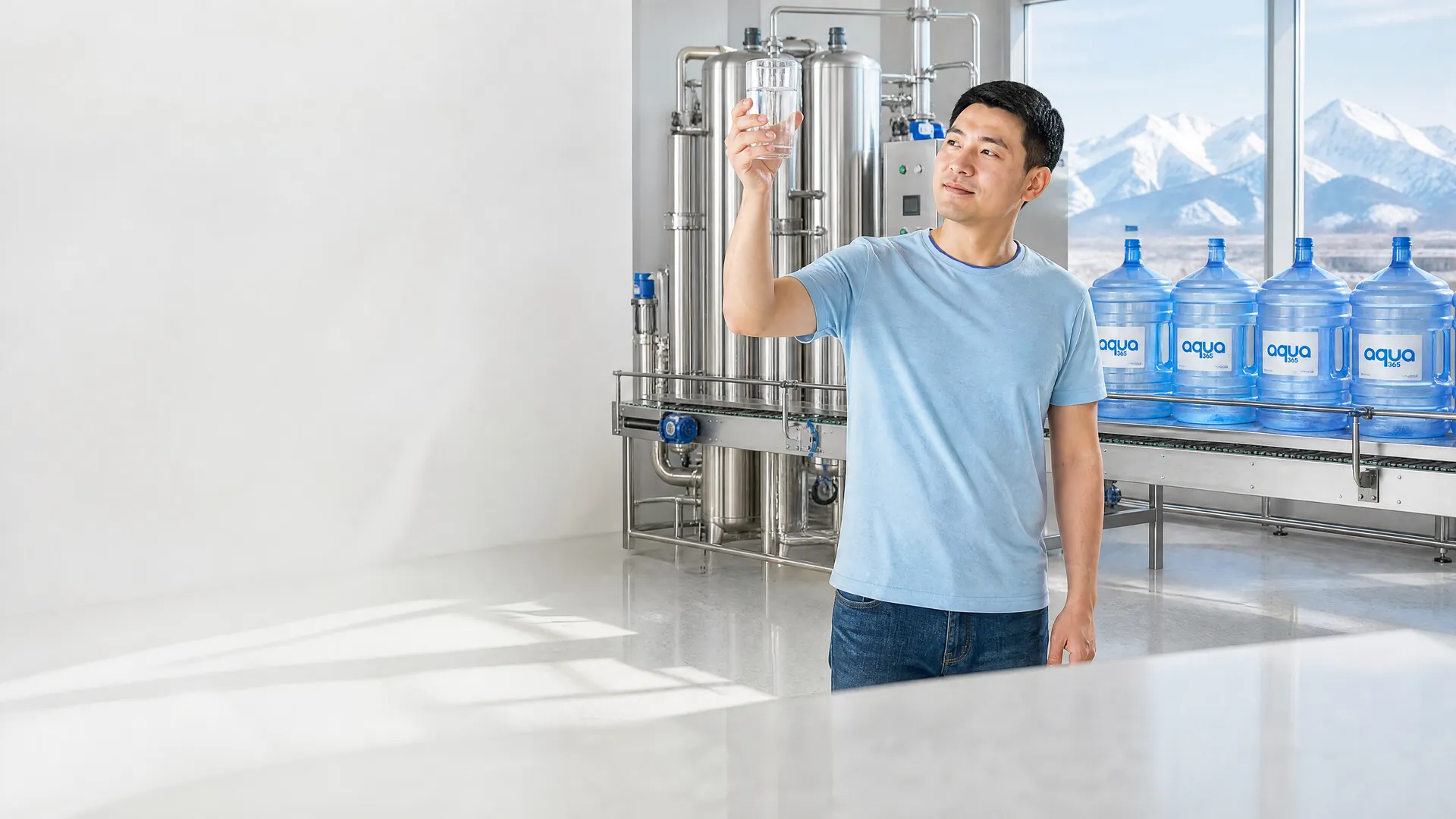
Our water comes from a 180 m well in the foothills of the Trans-Ili Alatau. It is not city tap water brought up to drinking standard by a membrane, and it is not raw water trucked in from someone else’s line: the well is our own, and it has a passport that names the aquifer. The composition of such water changes slowly and predictably, so month after month the same water ends up in the bottle.
What the word “artesian” on any water label actually means — a pressurised aquifer, an impermeable cap rock, the age of the layer — we covered in detail on the blog, in the article on the types and categories of drinking water. This page is about something else: what exactly goes into our bottle and what backs it up.
From the well to the bottle
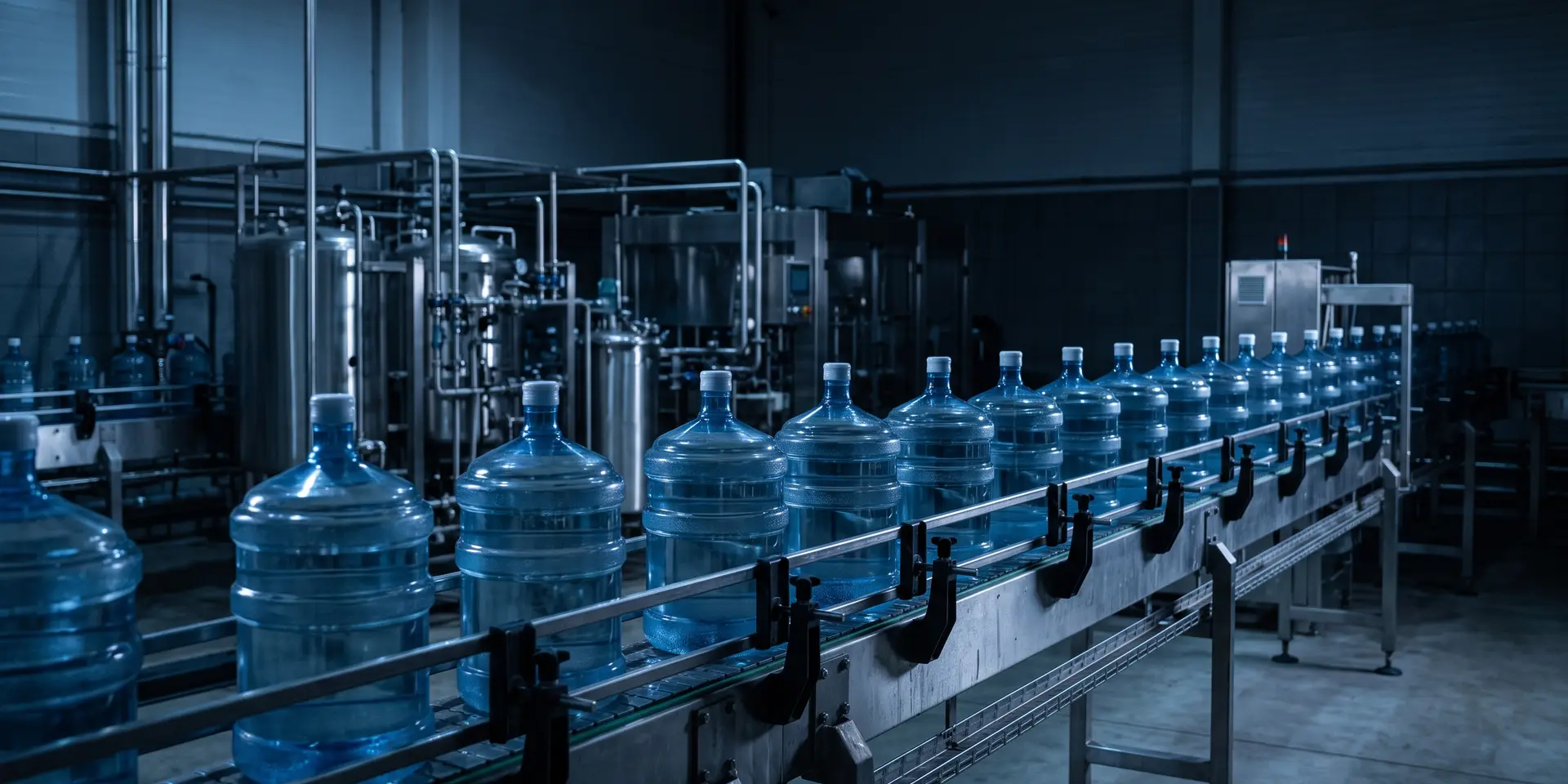
On our label the word means a specific well with a passport, not a vague reference to depth. What it stands for in hydrogeology is explained separately on the blog; here something else matters more — between the aquifer and the tap on your cooler there is a production line, and it counts for as much as the source. None of its steps adds anything foreign to the water: the whole chain exists to remove suspended matter without touching the composition.
Read more: Types and categories of drinking water
- Extraction. The water rises from the well through a closed pipeline and never meets the air — its first contact happens in your home, when the bottle is opened.
- Settling. In the holding tank, mechanical particles settle out: grains of sand and bits of rock that the water carries with it.
- Mechanical filtration. Cartridges catch what did not settle, from coarse particles down to micron-sized ones. Dissolved salts pass through such a filter freely, so this step leaves the composition unchanged.
- Disinfection. No chlorine: ultraviolet light and ozone leave no smell, no aftertaste and no compounds that would later have to be removed separately.
- Bottling. The bottle is filled in a closed circuit, capped straight away and fitted with a dated seal.
- Batch. A sample is taken from every batch and sent to the lab, and the batch waits for the result instead of going out to addresses before it arrives.
What this line does not have
No softening, no reverse osmosis and no remineralisation after it. This matters: water that has passed through a membrane loses almost all of its salts, and then it is either drunk like distilled water or has minerals added back artificially, to a recipe. We skip this not on principle but because there is no need — the well’s composition already sits within the drinking-water range.
Nor is there any interim storage in open tanks. Water that has stood for a week in a reservoir open to the air needs treating again, and a second treatment is the extra step where the difference between well water and any other water gets lost.
What you can see on the bottle when it arrives
The seal on the neck is intact and does not turn, the bottling date is readable without a torch, the walls are clear with no cloudiness, and the bottle has its own number. These four signs take ten seconds to check and answer almost every question about the batch. If any of them is off, it is easier not to accept the bottle — the courier will swap it for another from the van.
The whole journey from extraction to the van leaving takes hours, not days, and this is not speed for its own sake. The shorter the path from the well to the capped bottle, the fewer steps at which the water can pick something up. The most reliable treatment is the one that was never needed.
What the lab report shows
Every batch is tested before bottling, and the result is not a marketing line but a dated document. According to the latest report, mineralisation (TDS) is 220 mg/L, pH 7.2, hardness 1.8 meq/L, tested on 14.08.2026. We send the report itself to the chat on request: it is faster than looking for a scan on the website.
It is worth checking the test date with any supplier, not just with us. A report older than three months says nothing about today’s batch, and “the water has passed multi-stage purification” without figures says nothing at all. These are the three lines worth asking about.
- Well number and aquifer — not just “our own well” but a specific entry in the passport
- Report date — recent, not last year’s
- Mineralisation and hardness in figures — they show that the water is fit to drink every day
- Who did the testing — an accredited laboratory, not the company’s own quality department
Well, tap and trucked-in water: how they really differ
In the city, drinking water is obtained in several ways, and arguing about which is best makes no sense without this distinction: each method has its own price, its own taste and its own weak spot.
| Method | What happens to the composition | Weak spot |
|---|---|---|
| Well water in bottles | Natural composition, changes slowly | Needs bottles, a deposit and space for the bottle |
| Tap water after reverse osmosis | Almost no salts left, minerals added back to a recipe | The membrane is replaced on schedule, taste depends on the settings |
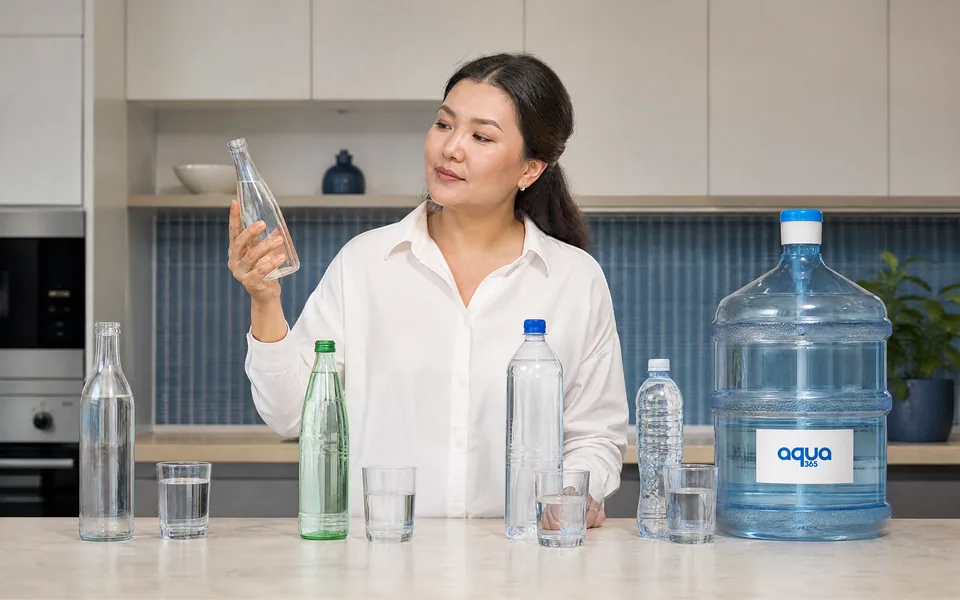
| Tap water after a filter jug | Removes chlorine and some hardness, the composition stays that of the city supply | The cartridge runs out unnoticed and starts releasing what it caught |
| Mains-fed purifier | Purified on the spot, the composition follows the incoming water | Tied to the pipe and to servicing |
| Trucked-in water with no bottling and no name | Composition unknown | No lab report and no one responsible |
The key difference between the first and second rows is not quality but where the consistency comes from. A well delivers a steady composition on its own: the aquifer is sealed by an impermeable cap rock, surface water does not get in, and the composition does not depend on what kind of April it was. City water changes with the seasons, and any purification built on it inherits these swings — a membrane removes salts but does not make the source water consistent.
Comparing the third and fourth rows by composition is not fair: a jug and a purifier solve a different problem — they give you water wherever there is a pipe, with no delivery and no storage. Their weak spot is shared: the result depends on whether the consumable was replaced on time, and the only reminder is the taste, usually too late.
The fifth row is not there for completeness. Water with no lab report and no supplier name is still sold in the city, and it is noticeably cheaper. The price difference here is the price of the paperwork: batch testing, the laboratory and tracked bottles all cost money, and whoever does not spend it can sell for less.
It makes sense to choose not by the word on the label but by what you are prepared to maintain. A bottle means deliveries and space for empties. Osmosis and a purifier mean servicing and cartridge changes. A jug means remembering the cartridge. Well water removes the maintenance and adds logistics; the other methods do the opposite.
Why “deeper” does not mean “better”
Depth guarantees nothing on its own. Water lower down is older, but also saltier: at great depths there are aquifers with mineralisation so high that the water is not drunk at all. That is why a well passport is read for the aquifer and the test results, not the metres — a depth figure in an advert weighs exactly as much as the word “eco”.
The same goes for the word “spring”. A spring is the same underground aquifer that has reached the surface by itself, and at the outlet it is open to everything above. Good spring water does exist, but it is proven exactly the way any other water is: with a recent, dated lab report.
- “Ecologically clean” — a rating with no measurable indicator and no one behind it
- “From the depths of the earth” — metres with no aquifer and no well number
- “Living” and “structured” — nice words without a single line in the lab report behind them
- “Multi-stage purification” without listing the stages — a description of any line, city mains included
- “Enriched with minerals” — a sign that the salts were added on the line rather than supplied by the rock
None of these labels is prohibited and none of them means deception. They simply measure nothing, so you cannot compare two bottles by them: the winner is whichever has the bolder marketing department. Compare by the three lines an honest supplier always has — a numbered source, the test date and the composition figures.
Sanitising the bottles: why it matters more than the word on the label
Good water is easily spoiled by a bad bottle, and more suppliers fail here than on composition. Before filling, every bottle is washed, disinfected and inspected: cracks, clouded walls or a worn neck are a reason to retire it, not to wash it once more. Each bottle has a number and a history, which shows how many cycles it has been through.
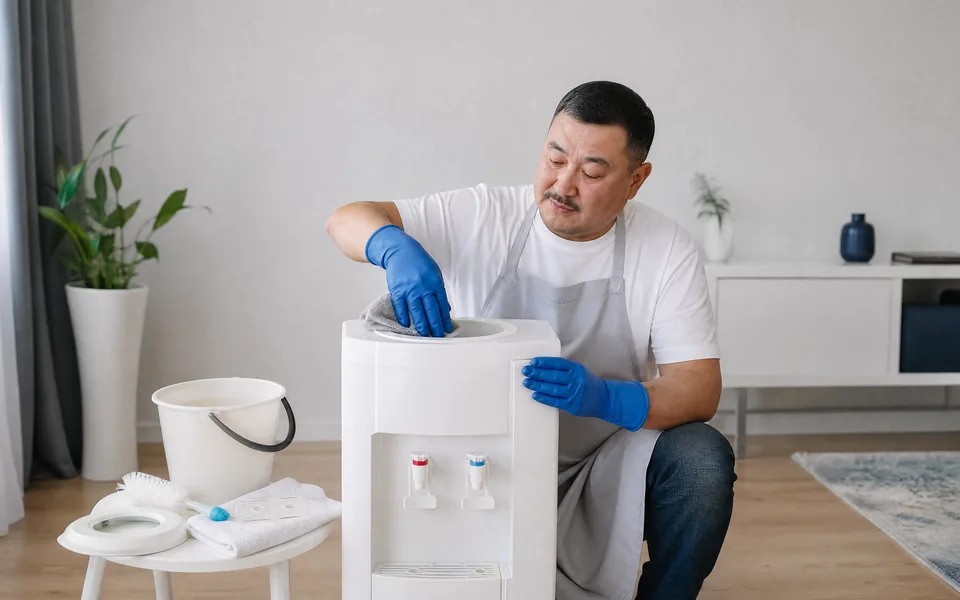
So the question “where does the water come from” is only half a question without “what does it arrive in”. We answer both: the well is named in its passport, bottles are tracked by number, and we clean your cooler free of charge when servicing it.
Why well water always tastes the same
The taste of water comes from three things: the set of dissolved salts, the temperature and the dissolved gases. The first is constant in a well, the second is up to you, and the third hardly changes after bottling. Hence the feeling people notice by the second or third delivery: the water is always the same. That is not habit but a property of the source.
City water makes the comparison easy. In spring, during the floods, it changes noticeably: turbidity rises, disinfection is stepped up, and a familiar aftertaste appears in the glass. In summer there are warm pipes, in winter a different intake temperature. An aquifer sealed by an impermeable layer notices none of these events.
- Temperature: the same water at eight and at twenty-five degrees tastes more different than two different brands
- Air in the bottle: as the water is used, air gets in, and after two or three weeks the taste turns softer and flatter
- The cooler: a musty note with a fresh bottle is almost always the tank, not the water
- Tableware: a metal mug and thin glass give the same water a different taste, and that is not imagination
- Habit: someone who switches from hard water to soft finds it bland for the first week
A separate word on limescale. It comes from hardness, not from quality: calcium and magnesium salts settle on surfaces when heated, and the more of them there are, the faster the deposit builds up. With soft water it builds up slowly but does not disappear entirely — no source can promise a kettle without limescale.
Softness also has a flip side that people rarely mention. Very soft water strikes many as bland: salts are the taste, and when there are few of them, all that remains is coolness. That is why people used to mineral water often keep both at home: a large bottle for every day and a pack of table water for meals.
If your water suddenly tastes different while the bottle is fresh, the order of checks is simple: first the cooler and its tank, then the tableware, then the bottling date on the label. The batch comes last on this list not out of politeness but by the numbers: complaints about taste almost always end with the equipment being cleaned.
The season when the water does feel different
There is one seasonal difference, and it is not about composition. In summer the bottle arrives warm because the van sits in traffic in the heat, and the first glass seems to taste different. An hour in the shade or half an hour on a cooler with chilling puts everything right. In winter it is the other way round: a bottle left overnight on a cold balcony stays icy for another half day, and polycarbonate turns brittle in the frost — which is exactly when it cracks while being fitted on the cooler.
The 19-litre bottle: price, volume and the price ladder
We do not have, and will not have, a separate price list for artesian water: it is our main water, and it costs exactly what a 19-litre bottle costs for the size of your order. The same bottle never has a second price, and there is no mark-up for the word on the label either: almost every service in the city describes itself that way, and it has long stopped counting as premium. A single bottle delivered once is 1 590 ₸, from two bottles 1 490 ₸, from five per delivery 1 420 ₸, from ten 1 350 ₸.
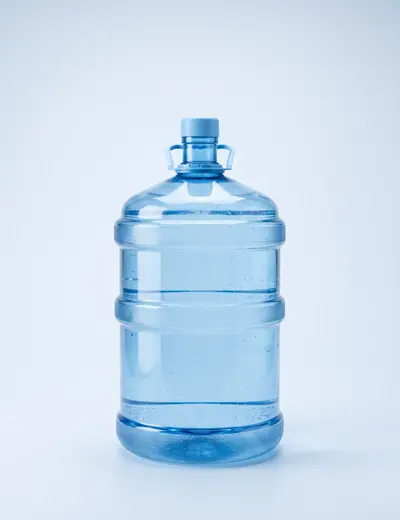
You do not need to buy the bottle: it carries a refundable deposit — 4 500 ₸ for polycarbonate and 3 500 ₸ for PET. Return the bottle and we refund the deposit; the courier handles the exchange on the same visit. Delivery across the city is free from 2 bottles; a single bottle costs 500 ₸ on top of its price.
Soft water around the house: kettle, coffee machine, iron
Hardness is the very quantity that leaves white scale in the kettle and streaks on glass after washing. For drinking, soft and moderately hard water are equally suitable, but around the house the difference shows at once and in money: appliances running on soft water last longer and need less upkeep.
| Where | What hard water does | What soft water changes |
|---|---|---|
| Electric kettle | Scale on the element and the bottom within a couple of weeks | Scale builds up slowly, cleaning once every few months |
| Coffee machine | Limescale in the boiler, brewing temperature thrown off | Less frequent descaling, more even espresso taste |
| Steamer and iron | Clogged holes and white marks on fabric | Cleaner steam, no marks on dark fabric |
| Tea | Film on the surface, cloudy brew | Clear brew, the tea’s own taste comes through |
| Humidifier | White dust on the furniture around it | Noticeably less dust |
Tea deserves a separate mention because the difference is visible without instruments. The film on cooled tea is hardness salts bound to compounds from the tea. With soft water there is almost none, the brew comes out clearer, and the tea’s own flavour does not have to fight its way out from under a mineral background.
Coffee is more complicated and more interesting. Very soft water extracts poorly: part of the flavour is drawn out precisely by the salts, and on distilled water an espresso tastes empty. Bottled water does not fall into this trap — it has enough salts — but water from a home osmosis unit without remineralisation suits a coffee machine poorly, and baristas know it.
Ice is a household task of its own. Cloudy cubes are caused not by dirt but by dissolved air and salts, which freeze last in the centre. Soft water makes clearer ice, and if you pour it into the tray already chilled and freeze it slowly, the cube comes out almost glass-like. For a glass of water this is cosmetic; for drinks with ice it is a clear difference.
Aquariums, plants and everything else
Bottled water does not only go into a glass. People use it for aquariums because it has no chlorine or chlorine compounds, so there is no need to wait a day for tap water to stand. House plants watered with soft water leave less white crust on the soil surface and on the pots. Neither is a reason to order an extra bottle a week, but if one is standing in the kitchen anyway, a litre for the watering can is no loss.
And a word on what soft water does not do. It does not replace cleaning the cooler, it does not dissolve deposits that have already built up, and it does not replace descaling the coffee machine as the manufacturer instructs. It only changes how often these jobs are needed — from monthly to quarterly, and that is its whole practical point.
How to order artesian water with delivery
One WhatsApp message: how many bottles and where to. Orders placed before 10:00 go out the same day, and you choose the delivery window yourself — 9–13, 13–17, 17–21; the day off is Sunday. If you need water urgently, there is an express delivery within 59 minutes across the city. The courier carries the bottle upstairs, fits it on the cooler and takes the empty one away.
We set up regular deliveries on a schedule: once a week, once every two weeks or once a month. No need to remind us — we bring it ourselves, and you can reschedule or cancel a visit with one message in the same chat before the van leaves.
When buying artesian water with a coupon pays off
A coupon locks in the price for a prepaid volume and does not depend on the size of a single delivery. A family that takes two bottles once a week gets no help from the volume ladder — it never reaches the next step — but a coupon gives it a large-batch price straight away. Coupons come for 25 / 50 / 100 bottles and never expire.
An office is better off doing the maths differently: its volume per delivery adds up anyway, and the ladder works by itself. We will work out what suits you best in the chat from your actual consumption — it takes two minutes and needs neither a contract nor prepayment.