





100 ml water — no shop in Almaty sells this size
Let us start with the honest answer, because it saves you time. Nobody in Almaty retail sells drinking water in a 100 ml bottle: not shops, not delivery services. We went through the public price lists of some fifteen suppliers in the city and did not find this item in a single one.
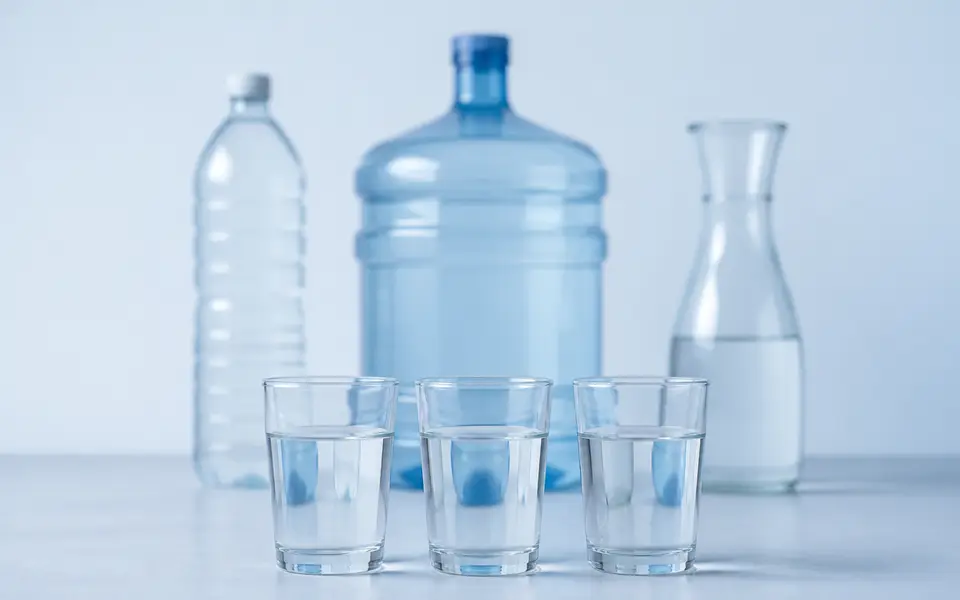
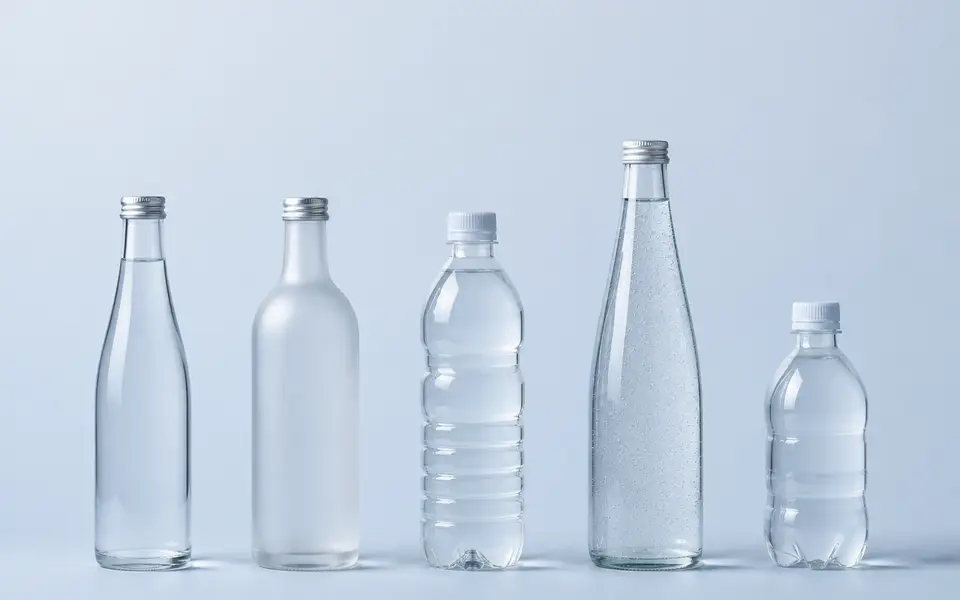
Bottling starts at a quarter of a litre. From there the steps follow a familiar range: 0.25, 0.5, 1, 1.5 and 2 litres, then large 5 and 6 litre containers and the 19 litre bottle. A hundred millilitres is not in that range and never has been.
We could put a product card with a made-up price here — many pages you will find for this search do exactly that. We will not: the price of a product that does not exist only becomes clear at the moment of delivery, and that is the worst way to get to know a service.
The sizes that are actually bottled
The range of sizes was not designed in an office; it grew out of how people carry, serve and store water. Each step is roughly twice the previous one, and each has its own use: one you hold in your hand, another you set in front of a guest, a third goes in the car boot, a fourth goes on the cooler. There are gaps between the steps, and a hundred millilitres falls right into one of them.
The bottom step in Almaty is a quarter of a litre. It is the smallest bottle filled on a production line, and it lives on children's and single-serve demand. Next comes a third of a litre, the restaurant format, and then half a litre, the only size an adult carries around all day.
| Size | Who buys it and for what | Where it stops being convenient |
|---|---|---|
| 0.25 litres | a child's backpack, a coffee for a guest | not even an hour's worth for an adult |
| 0.33 litres | meeting tables, catering, hotel rooms | expensive per litre, not worth buying for home |
| 0.5 litres | bag, car, gym, travel | runs out in a day at home |
| 1 litre | meeting room, office without a cooler | a bit heavy for a bag, lots of empty bottles |
| 1.5–2 litres | the fridge at home, a trip out of town | not for drinking from the bottle, you need a glass |
| 5–6 litres | a kitchen supply, the dacha, renovation work | awkward to lift and tilt |
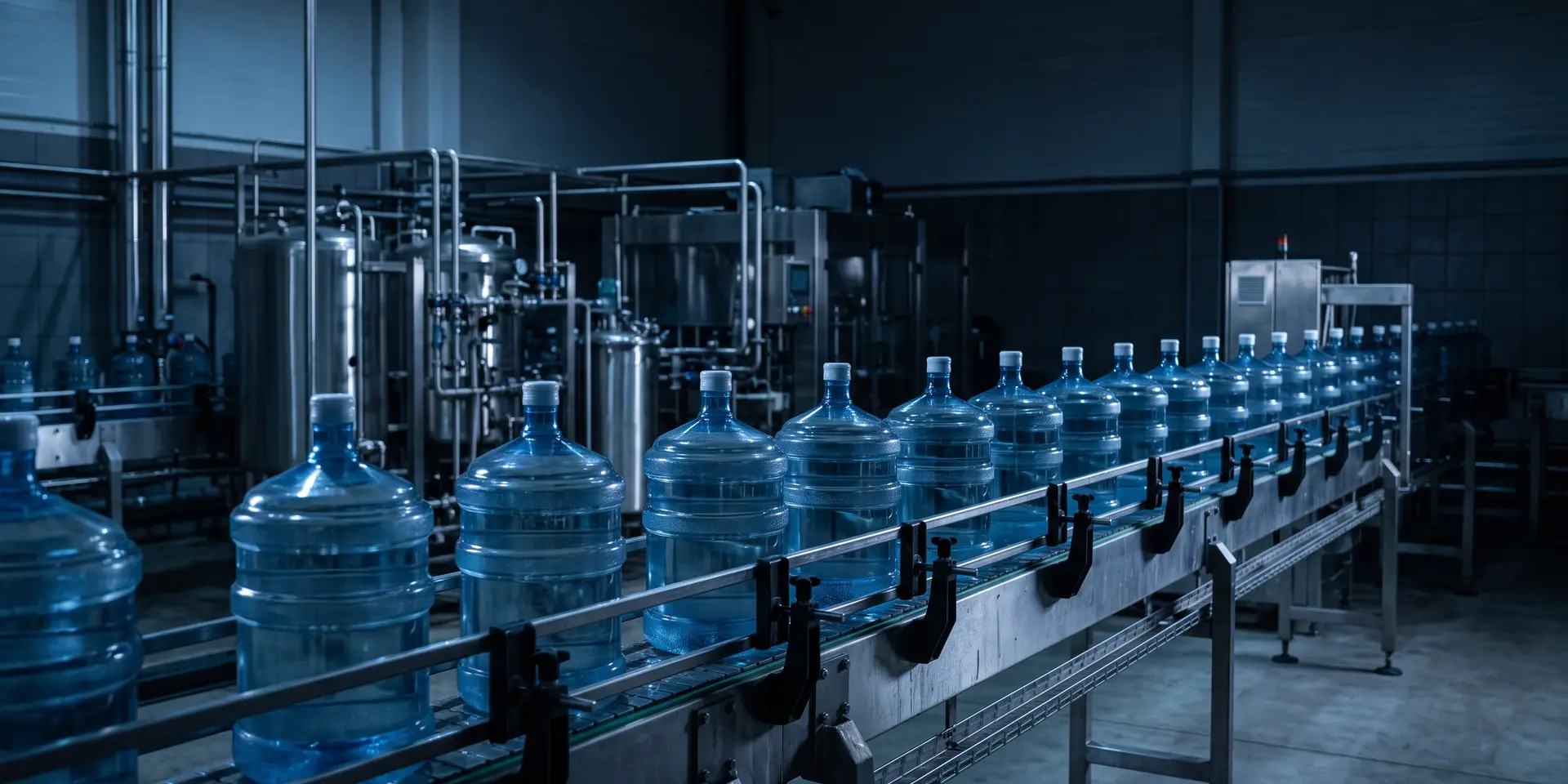
| 19 litres | a cooler or pump at home or in the office | needs a dispenser and space for the bottle |
The table shows the main point: the range covers every need, without gaps. If a quarter of a litre is too little, the next step gives exactly twice as much; if it is too much, you finish it later. A step below a quarter of a litre would leave people with a bottle that is not enough for anything and would mostly sell them plastic.
The range almost everywhere doubles at each step, and in-between sizes such as 0.4 or 0.75 litres are rare in drinking water. Again, the reason is not buyer taste but the carton and the pallet: each format needs its own stacking pattern, its own pallet and its own space in the truck, and nobody does that work for a step that differs from its neighbour by a quarter. A seven-step range already covers everything from a child's backpack to an office cooler.
So the question “where do I get a hundred millilitres” is almost always worth rephrasing: not what bottle, but what for. The second question always has an answer in this range, and most often it is the neighbouring step — a quarter or a third of a litre.
Why water is not bottled this small
The reason is economic, and you can see it by taking the bottle apart. The water is the smallest share of its price. The rest is the preform the body is blown from, the cap, the label, the shrink film, the space on the pallet and the truck run. All of that costs almost the same for a hundred millilitres as for half a litre.
From there the arithmetic decides by itself. Water in a 100 ml bottle would cost almost as much as a half-litre one, with five times less water inside. Next to it on the shelf stands half a litre for the same money, and the buyer's choice is predictable.
The second argument is logistics. To deliver a hundred litres of water in bottles this size you need a thousand bottles, a thousand caps and four times as many cartons as for the same hundred litres in half-litre bottles. No plant sets up a line for a format that loses on every count at once.
A hundred millilitres in practice: how much water is it
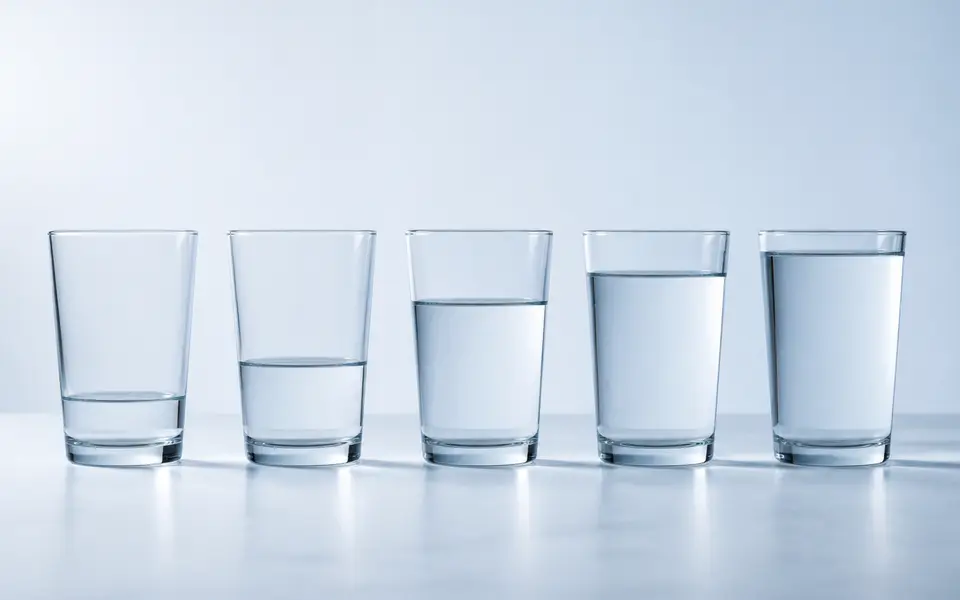
It helps to picture the volume before hunting for it in shops. A hundred millilitres is less than half an ordinary glass: a glass holds 200–250 ml, a teacup about 180. An adult finishes a bottle like that in four or five sips and puts it down empty before even knowing whether they have had enough.
After that the numbers get awkward. An adult's daily intake of plain drinking water is one and a half to two litres, which is fifteen to twenty of these little bottles a day per person. That is no longer something in a backpack but a whole carton, and you would carry it with a couple of dozen caps, labels and shrink film.
- A glass on the table — 200–250 ml, so two or three of these bottles
- A cup of tea or coffee — about 180 ml, almost two bottles
- A child's sippy cup — 200–300 ml, filled from a large bottle
- A sports flask — 600–750 ml, the amount for one workout
- An adult's daily intake — one and a half to two litres; here you count in litres, not millilitres
There is also an argument against the very idea of a small bottle you finish in one go. For a child it holds, for an adult it does not: adults do not drink in one gulp, they sip all day, and what matters to them is that the water does not run out, not that the bottle gets finished. A screw cap solves that better than a tiny size.
Part of the confusion comes from a hundred millilitres being a familiar measure in very different places. In a recipe it is half a glass of milk, in medicine instructions it is how much you take a tablet with, in a lab it is a standard sample. In all three cases the volume is measured out, not bought: it is poured from whatever is already in the kitchen. Drinking water works by other rules — it is sold by the bottle, and the bottle has to pay for itself.
Hence the practical conclusion. If you need a bottle for an hour or an hour and a half, take a quarter or a third of a litre; for a whole day, half a litre. Anything under two hundred millilitres is handled in everyday life not by buying, but by pouring water from a large bottle into whatever you drink from: a glass, a mug, a sippy cup or a flask.
Where 100 ml water does turn up
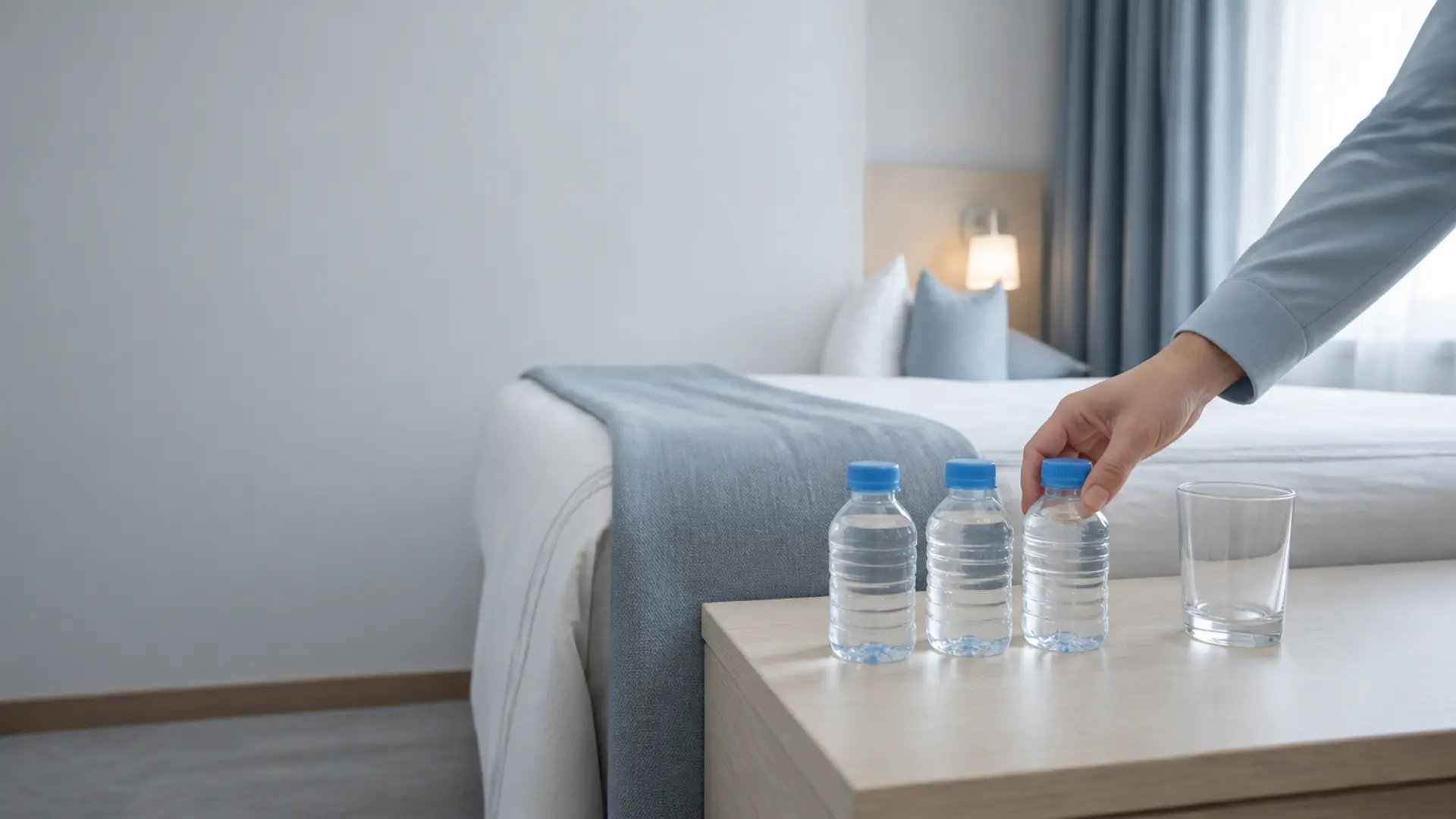
The format exists, just not in retail. Airlines hand out small bottles on board, hotels put them in amenity kits and travel sets — what matters there is not the volume but that the bottle fits in hand luggage and is no loss if left behind. Such batches are printed for a specific client and never reach the shelf.
Pharmacy vials of the same size are a separate story. 100 ml drinking water and water from a pharmacy are not the same thing: in a pharmacy it is a sterile solution with its own purpose, and there is no need or reason to use it instead of ordinary drinking water.
One more place where a hundred millilitres is perfectly legitimate is hand luggage. Airport security rules limit the volume of liquid in a single container, and travel bottles are made exactly to that limit. But that is about cosmetics and toiletries, not drinking water: on a plane you are given water on board anyway, so there is no point bringing your own.
A batch of small bottles for an event: how it is ordered
The only legitimate way to get water in bottles this size is to order a run from a plant. That is not buying a product but placing a production order: it has artwork, a print run, a place in the line queue and batch acceptance. That is exactly how the little bottles in hotel kits, business-class cars and conference registration desks come about.
- You name the occasion, the quantity and the date by which the water must be on site
- The plant confirms whether its line can fill that size at all and states the minimum run
- A designer prepares the label on the plant's template: composition, volume, bottling date and shelf life are required by law, the rest of the space is yours
- The labels are printed separately from bottling, and this is the longest step in the chain
- The batch is filled, packed and shipped in full: leftovers never go on sale
The minimum run is where the idea usually falls apart. The line has to be reset for the format, and nobody resets it for two cartons: runs are usually counted in thousands of bottles. For a conference of two hundred people this means water will be left over after the event, and that is a normal part of the calculation, not the organiser's mistake.
Lead times are longer than they seem, too. From approving the artwork to a finished batch takes several weeks, and most of that time goes not on the water but on printing the label and waiting for the line. An order “for the day after tomorrow” does not exist in this setup.
There is one more thing worth knowing about the label in advance. Only the design is yours: the water's name, producer, composition, mineralisation, volume, bottling date and shelf life are there by law and cannot be cut. The plant, not the owner of the logo on the bottle, is responsible for the water — and that is a good thing, because the lab report and sanitary documents stay with whoever bottled it.
We do not take on runs like this and will not pretend that we do. If you need branded water by a certain date, message us on WhatsApp with what and when, and we will tell you straight whether we can take it on and what can realistically be done in time. For the event itself we will bring what the city actually has: a third of a litre and half a litre, in packs and at the time you need.
100 ml children's water and what replaces it
Most often it is parents who search for this size: it seems a child needs a small bottle they will finish. The thought is right, but 100 ml children's water is not made for it — children's ranges are bottled in quarter- and half-litre sizes for drinking and in large containers for formula and porridge.
In practice the job is done by a quarter or a third of a litre: a child finishes a bottle like that in one go, it fits in the side pocket of a backpack and does not take up the whole bag. At home, for formula, people buy large containers — what matters there is not the size of the bottle but the composition of the water and how fresh the opened container is.
How much a child drinks and which bottle suits them
Since the search for a tiny bottle is almost always about children, it is worth looking at the numbers. A child drinks less than an adult, but more often and in small portions, and the size of the bottle matters not in itself but in whether they will carry it and finish it by the end of the day.
| Age | Plain drinking water a day | Which bottle is convenient |
|---|---|---|
| 1–3 years | about 0.6–0.8 litres | a sippy cup at home, filled from a large bottle |
| 4–6 years | about 1 litre | 0.25 litres, usually in the adult's bag |
| 7–10 years | 1–1.2 litres | 0.25 or 0.33 litres in the backpack |
| 11–14 years | 1.3–1.6 litres | 0.5 litres, like an adult |
The figures in the table are a guide for a quiet day indoors. Heat, a sports club and illness with a fever raise them noticeably, and on such days what matters is not the size of the bottle but that the child has water to hand at all and remembers to drink it.
Water for formula and porridge is a separate case. Here the bottle size does not matter at all, but the composition does: children's ranges are bottled with lower mineralisation and their own lab report, and they are bought not in little bottles but in large containers, because over a day far more of this water goes into feeding than the child drinks. It still has to be boiled and cooled, and that is done in one go for several feeds.
One more thing works against a bottle kept “in reserve”. An opened bottle does not keep: in the warmth and after a few sips from the neck, the water lasts hours, not a day. A small size does not solve this — the habit of finishing what is open and pouring fresh water does.
- Give the bottle the child will finish in one go, not the one that lasts longest
- An opened bottle from the backpack is poured out by the evening, not topped up until morning
- Do not freeze a full bottle: the ice stretches the plastic, and the child gets a lump of ice instead of a drink
- Label the bottle for sports clubs and camps — that way it will not go home with a teammate
- For a long day out, two small bottles are handier than one big one: the second one travels unopened
What to take instead
You cannot buy 100 ml water in Almaty, but you can meet the need you were looking for it for. The choice depends on what the small bottle is for.
- For a child's backpack and sports club — a quarter or a third of a litre, finished in one go
- For a guest's table and for events — a third of a litre, the restaurant single-serve format
- To carry all day — half a litre, the only size people carry around all day
- For hotel rooms and travel kits — a made-to-order batch; it has no retail shelf
We deliver across Almaty small bottles from a third of a litre, large 5 and 6 litre containers and 19 litre bottles. Message us on WhatsApp with what the water is for — we will suggest a size and bring it along with your usual order.
Mistakes that send people looking for a size that does not exist
We see this search often and have learned to recognise what lies behind it. Almost always the issue is not the bottle but one of five common mistakes, and each is solved without hunting for a product nobody in the city has.
- The size is confused with the hand luggage rule: a hundred millilitres is the limit for a container on a plane, not a drinking water format
- A small bottle is bought “so it does not go off”, yet it is an opened bottle that goes off, not a big one
- A child's size is chosen by their height, not by how much they actually drink in half a day
- A batch for an event is looked for in a retail service's price list, when it is a plant order with a print run, artwork and lead time
- A pharmacy vial of the same size is mistaken for drinking water, though it has a different purpose and a different price
A word about pages that promise this size. If a product card shows a price and offers to “check availability”, it is almost always a substitution: you will get a quarter of a litre charged at their own rates. You can check it with one question in the chat before ordering — what size will arrive and how many bottles are in a pack.
For those who really need a small sip rather than a small bottle, a reusable 300–500 ml flask works best. You fill it at home from the water you drink anyway, it does not leak in a bag, it is easy to spot on the table and it does not turn into rubbish by lunchtime. The only condition is to wash it every day: in a warm flask with water left in it, bacteria multiply faster than in an open bottle, and that, not the bottle size, is the real hygiene question.
The second sign is a page that answers the same search with a story about delivering big bottles. That is not the supplier's mistake, just a different conversation: someone asked about a small bottle and was shown a cooler. We decided to answer the question that was asked, even if the answer is no.
And one last thing. A missing product is bad news exactly once, in the minute you read about it. After that it saves time: instead of ringing round shops, you are left with one question — how to meet the need — and in Almaty there is always an answer. If a bottle this size appears in the city, it will appear here too, with a price and availability, and until then this page will say what it says now.