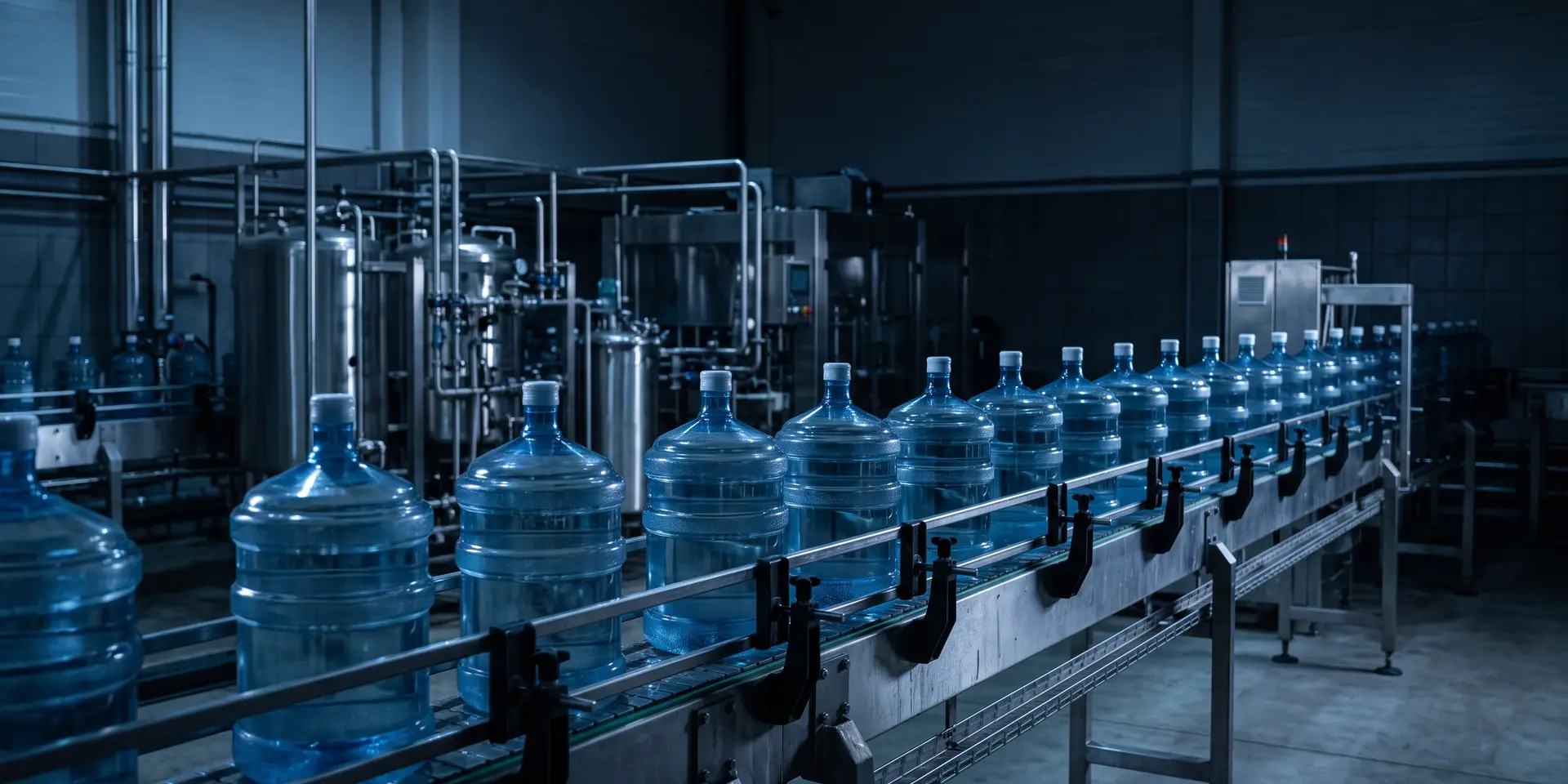






2 litre water — a daily amount in one bottle
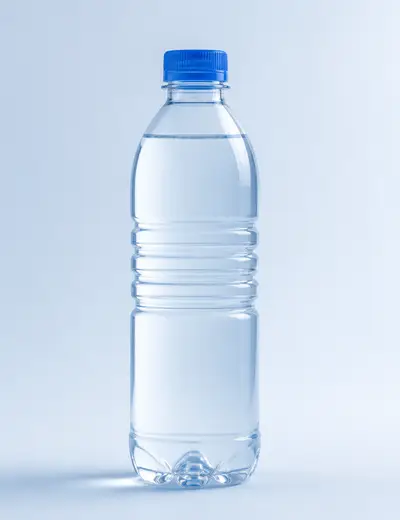
Two litres is a rare case where the size of the bottle matches an everyday measure. An adult needs about that much fluid on an ordinary day, and the 2 litre bottle becomes a counter: full in the morning, empty in the evening — the day is done. No need to count glasses or remember how many times you went to the kettle.
That is exactly why people who watch how much they drink buy it: the bottle goes on the work desk, in the car or in the gym bag and is finished by evening. The measure is visual and needs neither an app nor a habit.
Our 2 L water is the same as in the 19 litre bottles: one artesian well, one bottling line, one lab report. The only difference is the bottle, and that a 2 litre one doesn't have to go on a cooler.
Another property of the size is noticed later: a 2 litre bottle needs no counting. With half-litre bottles you have to drink four a day, with one-litre ones two, and remember to open each one. One bottle removes the arithmetic altogether, which is why people who have already tried to track their drinking and gave up on the third day go for it.
How much water you need a day and where the measure comes from
Two litres is not a medical norm but a round figure. The need is calculated from body weight: roughly thirty millilitres per kilogram a day, and that includes all fluids — tea, soup, fruit, not just the water you drink. For a person weighing seventy kilograms that comes to a little over two litres in total, of which about half is plain water.
So why does the measure stick? Because it is convenient and errs on the safe side: it is hard for a healthy person to drink too much ordinary water, and easy to drink too little in an Almaty summer. Dry air and altitude drive moisture loss through breathing, and thirst arrives after the shortfall has begun, not together with it.
| Weight | Ordinary day | Heat or a workout | In 2 litre bottles |
|---|---|---|---|
| 50 kg | about 1.5 litres | up to 2 litres | one |
| 60 kg | about 1.8 litres | up to 2.4 litres | one and a bit |
| 70 kg | about 2 litres | up to 2.8 litres | one to one and a half |
| 80 kg | about 2.4 litres | up to 3.2 litres | one and a half |
| 90 kg | about 2.7 litres | up to 3.6 litres | one and a half to two |
Read the table as a guide, not a prescription. People rarely drink exactly that much: food covers part of the norm, tea and coffee another part, and on days without exertion the body asks for less. The point of the bottle is different: it shows how much plain water you have drunk, and that is the one figure nobody otherwise keeps track of.
A separate word about those who really need the measure: sport, outdoor work, flights, hot workshops. There the loss runs to litres, and the 2 litre bottle turns from a reminder into a working tool — people take it for the shift and finish it to the last drop, not roughly.
How to spread two litres over the day
A bottle on the desk only works if you drink from it evenly. The typical mistake is to remember it at six in the evening and gulp down a litre: it will quench the thirst but spoil the night. An even schedule is simpler and needs neither an app nor an alarm — one checkpoint in the middle of the day is enough.
- A glass right after getting up, before coffee: you lose up to half a litre overnight
- Then a glass between meals, not during them
- By lunch half the bottle should be gone — that is the only point worth keeping in mind
- After a workout or a journey in the heat — a glass on top of the schedule
- The last glass an hour or an hour and a half before bed, leave the rest for the morning
Drinking in big gulps is no better: water is absorbed evenly, and a litre downed at once goes almost straight to the kidneys. For the same reason yesterday's shortfall cannot be made up today — there is nothing to make it up with, and the extra load falls not on thirst but on the body.
Temperature matters too, especially in summer. Ice-cold water feels like salvation in the heat, but people drink it in small sips with breaks; cool water goes down more evenly. That is why the 2 litre bottle is often kept not in the fridge but next to it, and only what is poured into the glass gets chilled.
Cooking: the kettle, coffee and limescale
The second reason people buy this size is the kitchen. The kettle, the coffee pot, the coffee maker, porridge, soup, compote — water goes into all of them, and its hardness affects not only the taste but also how long the appliances last. The deposit left on the walls of the kettle after hard tap water is the same deposit that settles in the coffee machine and the iron.
The 2 litre bottle fits neatly into this routine: it is enough for a kettle with some left for the morning, it doesn't take up a whole shelf and you don't mind taking it to the dacha. Cooking entirely with bottled water is expensive and unnecessary — but many people use it for drinking, tea and coffee.
There is a flip side worth being honest about. The taste of tea and coffee depends not only on hardness but on mineralisation too: with water that is too soft, tea comes out flat and espresso dull. In this sense artesian water with medium mineralisation is more convenient than distilled water or water after deep reverse osmosis, which then has to be remineralised.
| Use | How much water it takes | What is left of the bottle |
|---|---|---|
| One adult's drinking for the day | about two litres | nothing, exactly one bottle |
| A kettle for an office meeting | one and a half litres | a couple of glasses |
| Tea and coffee at home for the day | less than a litre | more than half |
| Porridge, soup and compote for a family | a litre to a litre and a half | a glass or two |
The table also shows where the format ends. As soon as water goes not only into drinking and tea but also into the pot and the compote, two litres no longer last the day, and at home people start taking two or three bottles at once. From this point it is cheaper to count in large bottles and keep the 2 litre one for the table and the road.
Appliances that live on soft water
Limescale is not dirt but calcium and magnesium salts that have come out of the water. The more there are, the faster the crust builds up, and it hits first what heats the water: the kettle element, the coffee machine boiler, the steamer heater. Bottled water is softer than tap water, and the difference shows less in the taste than in how long appliances last.
- Kettle: with soft water no crust builds up for months, and the water doesn't taste of metal
- Coffee machine and cezve: hardness throws off the taste of espresso more than the choice of bean
- Multicooker and steamer: deposit on the bottom of the bowl gets in the way of even heating
- Garment steamer and iron: they need demineralised water; drinking water is only softer than tap water and doesn't replace it
- Humidifier: the white film on the furniture comes from hardness, and with soft water there is noticeably less of it
There is no point switching the whole home to bottled water: washing dishes and doing laundry with it is expensive and pointless. A sensible line is what you drink and what you heat: drinking, tea, coffee, soups, porridge and appliances you care about. The 2 litre bottle suits this list better than others — one is enough for a kettle with some left for the morning.
Even with soft water appliances need cleaning: the deposit builds up more slowly, but it does build up. A kettle usually needs rinsing out every two or three months, a coffee machine by its own cycle counter rather than by the calendar. The difference between hard and soft water here is not whether to clean but what to clean with: with soft water a sponge is enough, with hard water you reach for acid, which eats the seals as well.
The easiest way to judge your water's hardness is by the kettle. If a crust appears within two weeks, the water is hard, and an appliance that heats it lasts noticeably less than its rated life. Our mineralisation and hardness figures are in the lab report, and we send it on request — it is a laboratory document, not an advertisement.
The dacha, the road and places without a cooler
2 litre water goes where nothing can be left for long. A dacha for the weekend, a rented flat for a week, the boot of a car, a tent, a hotel, a two-day building job. These are all places where you can't put a nineteen-litre bottle, but you get just as thirsty.
A bottle like this has one more everyday advantage: it is easy to half-freeze. Half a bottle in the freezer overnight, top it up in the morning — and by lunch in the car in the Almaty heat you have cold water without a thermos. Freezing it full is not a good idea: ice expands and splits the thin plastic.
- To the dacha and on a trip — by the pack, the bottles don't break and don't have to be returned
- In the car — one in the boot, one behind the seat, both still
- To a building site or a crew call-out — by the box, count two litres per person per shift
- At home in case the water is cut off — a supply for two or three days is inexpensive and doesn't go off
All these places have one thing in common: there is nobody and nowhere to look after water equipment. A cooler needs a socket, a level floor and someone to change the bottle; a building site and a rented flat have neither the first nor the third. The 2 litre bottle needs nothing but a place to stand, and that is its main advantage over any equipment.
A supply for a trip is counted by people and days: two bottles per person per day in summer and one and a half in the off-season. A crew of five on a two-day job means twenty litres, that is ten bottles or two packs. Don't cut it too fine: in the heat the norm goes faster than the calculation, and there may be no shop nearby.
Mistakes that spoil the taste
Most complaints about bottled water are explained not by the bottling but by what was done with the bottle at home. The mistakes repeat from one home to the next, they are all everyday ones, and they are all fixed by habit, not by changing supplier.
- Drinking from the bottle and putting it back: a day later the water in it is no longer what was poured
- Leaving it in the car in the sun: heated plastic gives off a smell within a few hours
- Freezing it full: ice expands and splits the thin wall at the seam
- Topping up an opened bottle with tap water: that is where the point of buying it ends
- Washing it and refilling: the wall gets scratched inside and cannot be cleaned properly at home
- Keeping it open by the stove: steam and grease settle on the neck
A separate mistake is storing the supply next to household chemicals. Plastic does not keep smells out: washing powder, solvent or paint in the same pantry give the water an off-taste within a week, and there is no getting rid of it afterwards. Bottles are kept apart, like food, not like household supplies in a corner.
And the thing people ask about most: cloudy streaks on the wall of an empty bottle are traces of dried water and fingers, not mould. They don't appear on a full sealed bottle. If you see anything like that before opening, it is simpler not to accept the bottle and tell the courier — they will bring a replacement from the van.
Another place where taste gets lost is the glass. Water from a fresh bottle poured into a mug that held yesterday's tea takes on its taste completely, and the water gets the blame. If you are trying a new batch, pour it into clean glass and at room temperature: cold mutes both the good notes and the bad.
One 2 litre bottle or several small ones
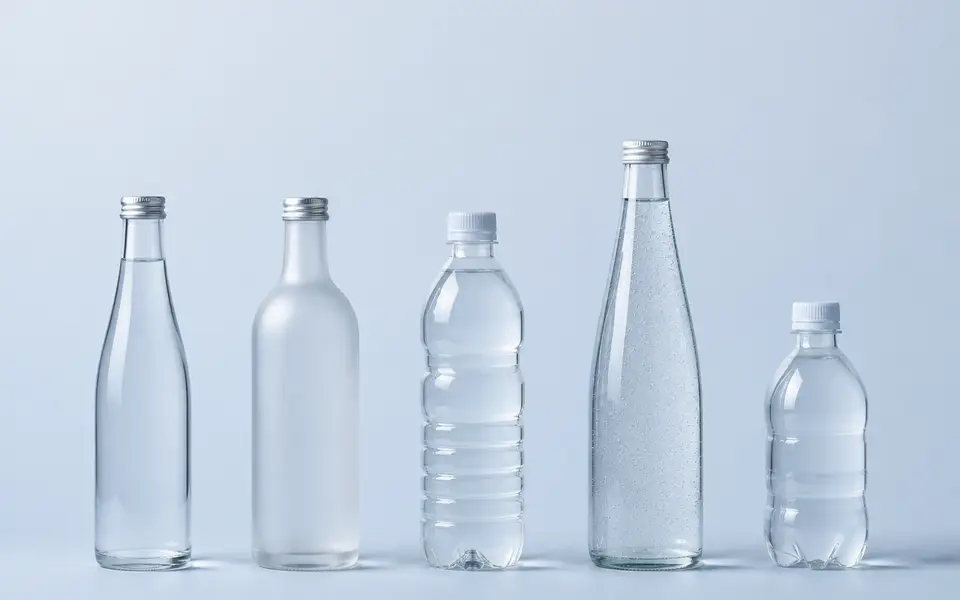
Two litres can be made up in different ways, and each has its own price for convenience. One bottle is cheaper per litre and is opened once; four half-litre bottles fit in pockets, but they are also opened four times. Below is a comparison by what usually decides the choice.
| Option | How many bottles | What's good about it | What's awkward |
|---|---|---|---|
| One 2 L bottle | one | opened once, cheaper per litre | you can't carry it around, it needs a fridge shelf |
| Two 1 L bottles | two | one for the desk, the other to take with you | two caps and two labels in the price |
| Four 0.5 L bottles | four | fit anywhere and don't have time to warm up | the most expensive litre and the most plastic |
| One 5 L bottle for two days | one for two days | cheaper per litre, order less often | heavy to pour, needs a bottom shelf |
| A 19 L bottle with a pump | one per week | the cheapest litre, no plastic at all | needs room for a pump and a deposit for the bottle |
In practice it most often comes down to a pair: a 2 litre bottle at home and a half-litre one with you. That covers both the norm and the road, and there is less plastic than with four small ones. If the whole family drinks the water, a big bottle is added to the pair — it settles the question of price, and the small bottles stay for going out.
And about the weight of the bottle itself. Two kilograms is no longer a pocket format: people don't walk around town with a 2 litre bottle or put it in a child's backpack. On the other hand, it doesn't fall off the table at a careless move or roll under the sofa, which cannot be said of the half-litre ones, four of which pile up on the table in a day.
Counting by price per litre makes sense from about ten litres a week. Below that volume, the difference in money between formats is smaller than the difference in convenience, and it is worth choosing by where the bottle will stand and who will pour from it.
Plastic deserves a separate word. Two litres in one bottle means one cap and one label; the same two litres in four half-litre bottles means four caps, four labels and four times the work at the recycling point. The difference in the weight of plastic for the same amount of water reaches two and a half times, and over a week you can already see it in the bin.
2 litre water: the price and how to count a pack
On this page we show the price per bottle — 360 ₸. That way you can compare it with the neighbouring sizes and see what exactly you are buying: the bigger the bottle, the smaller the share of the bottle itself in the price, and in this sense the 2 litre one sits right in the middle between small take-along bottles and large ones.
It is almost always bought by the pack: six bottles are twelve litres, a week's supply for one person or a weekend for a family. We tell you in the chat how many bottles a particular batch has: the size of the wrap depends on the manufacturer, and writing it as a number on the page would mean getting it wrong one day.
How the water travels also affects the price. A separate trip for two packs costs more than the same packs arriving together with big bottles on your usual schedule. That is why it pays to add small bottles to a cooler water order rather than order them one by one and urgently.
Coupons and prepayment don't apply to small bottles: they are designed for the 19 L bottle and fix its price. Here the role of the discount is played by the size of a single order — the bigger the batch, the smaller the share of delivery in it. We give the exact figure for your volume in the chat before you confirm the order.
How to order and what to keep in mind for storage
An order is one message on WhatsApp: size, quantity, address. Small bottles travel with the big ones, delivery in the city is free from 2 bottles per order, windows are 9–13, 13–17, 17–21. An order placed before 10:00 usually goes out the same day; there is one day off: Sunday.
Keep the supply where there is no sun and no heat: a balcony in summer and a spot by the radiator in winter are the worst options possible. Keep an opened bottle in the fridge and finish it within a couple of days — not because the water goes off by itself, but because an open neck stops being sterile from the first sip.
The shelf life of a sealed bottle is measured in months, and the bottling date is on the label. A supply for a week or two is fine to take, a supply for six months is pointless: water doesn't get better with keeping, but it does take up space. A sensible horizon for small bottles is from one delivery to the next, and a schedule works better here than a big pantry.
A separate note on tea and coffee: they are not subtracted from the norm, as people tend to think — the diuretic effect of caffeine in ordinary amounts is outweighed by the volume of the liquid itself. But they can't fully replace water either: tea is sweet, coffee is acidic, and neither is drunk by the litre without consequences for the stomach.