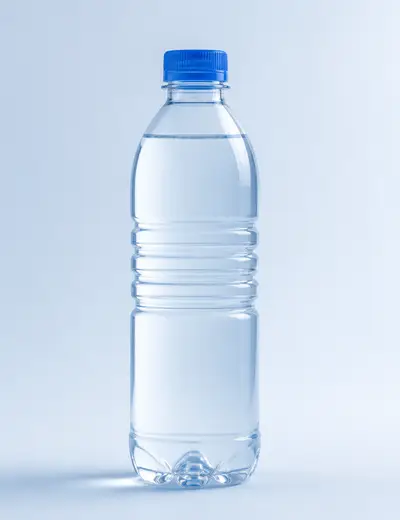






1 litre water — a handy measure for comparison
A litre is the only amount of water that does not need converting into anything. Daily intake is counted in litres, office consumption is counted in litres, and any delivery service's price list ultimately comes down to the price of a litre. So a one-litre bottle is handy not just as a container but as a way to see how much you are really paying.
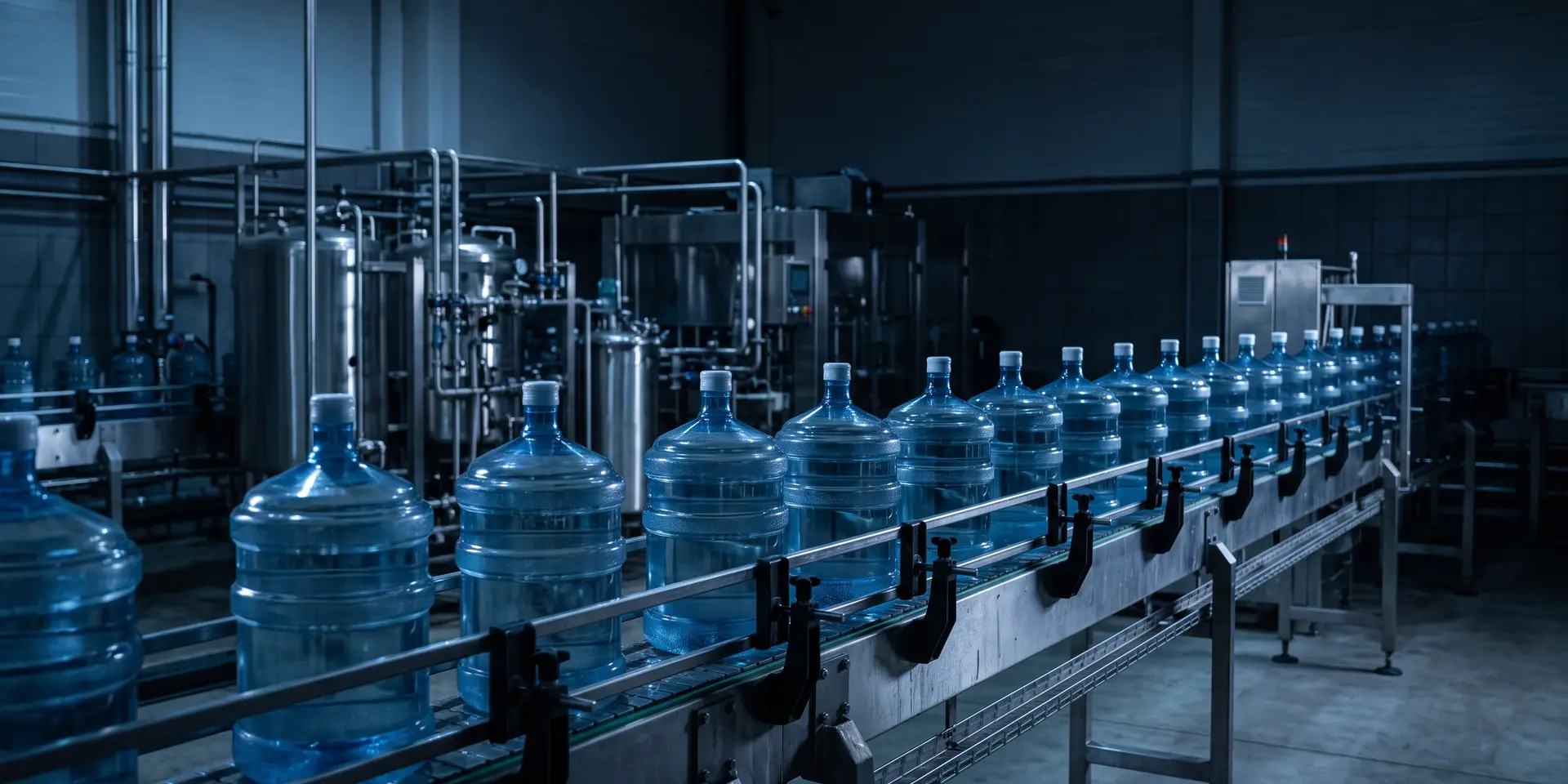
Our 1 L water is the same as in the 19 L bottles: an artesian well, one bottling line, one lab report. What differs is the container, and with it the habit: a large bottle sits on the cooler for weeks, while a one-litre bottle is opened and finished within a day.
The litre as a measure: why it is handy for counting
Almost everything about water is expressed in litres. Daily intake is one and a half to two litres, office consumption is so many litres a week, a large bottle holds nineteen litres, and any service's prices work out at so much per litre. As long as you count in bottles and packs, offers cannot be compared; once everything is converted to litres, the picture comes together in a minute.
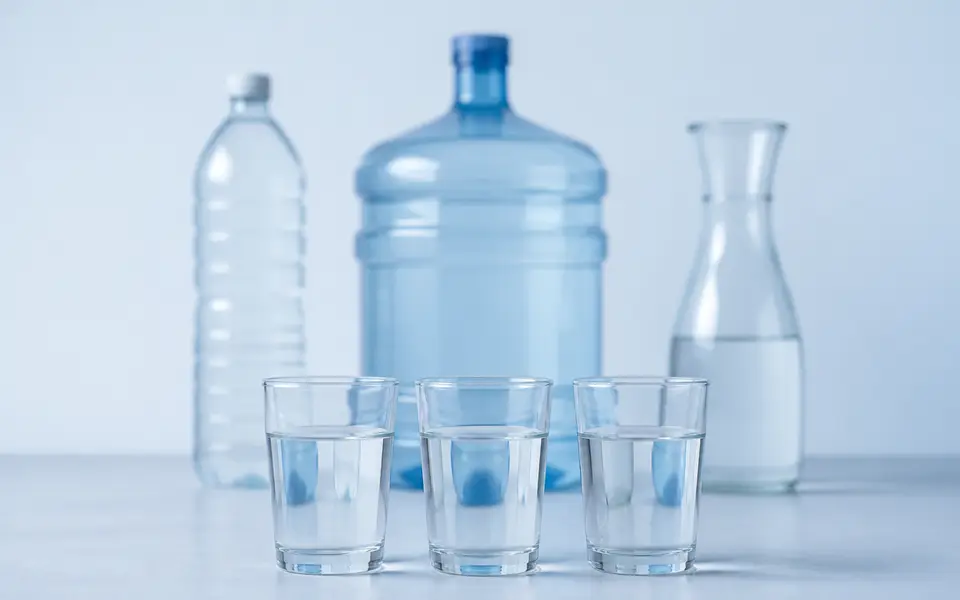
The most useful conversion is between containers. One large bottle on the cooler equals nineteen one-litre bottles, which is almost two weeks of drinking water for one adult. One one-litre bottle is two thirds of the daily intake. A couple of packs of 1.5 litre bottles in the boot is roughly one large bottle, just split into handfuls and without a cooler.
- One large bottle — nineteen one-litre bottles, or almost two weeks of drinking water for one person
- An adult's daily intake — one and a half to two litres, that is one and a half to two one-litre bottles
- An office of ten people drinks about fifteen litres of plain water in a working day
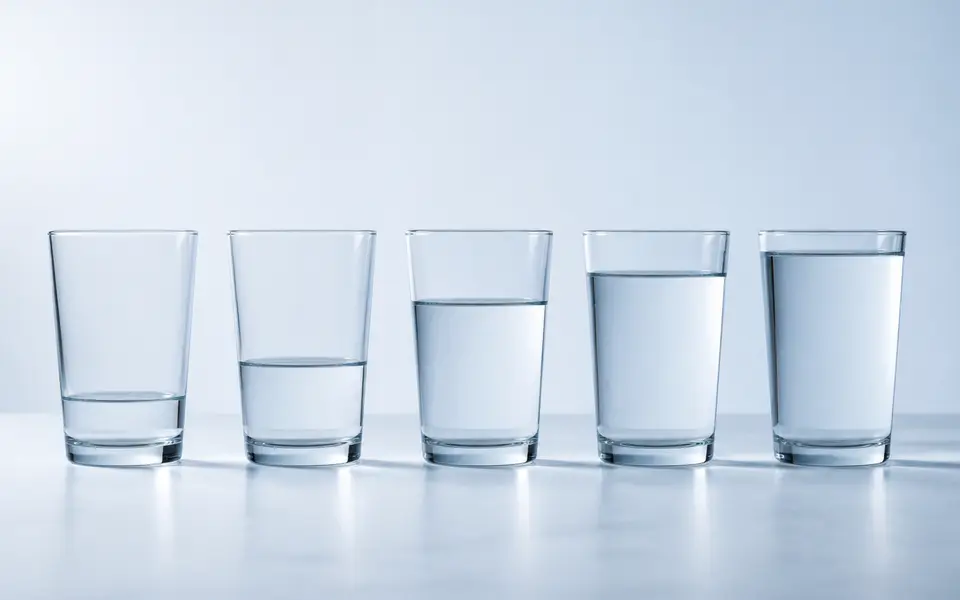
- A one-litre bottle is four glasses, which makes it easy to keep track of how much you have drunk in a day
- A month for a family of three — about a hundred litres, and in small bottles that is a hundred bottles
One caveat to the norm, without which the calculation always comes out too high. One and a half to two litres is plain drinking water, not all the water a person takes in over a day: tea, coffee, soup, fruit and vegetables provide a noticeable part of it. So the formula on paper is almost always higher than real consumption, and it is wiser to plan purchases from two or three weeks of actual use than from a table.
Counting in litres is more reliable also because a pack is a moving target. The contents of a carton depend on the batch and the plant, and a “pack” from two suppliers can differ by half as much again. A litre is the same everywhere, which is why we keep the price per bottle rather than per carton: you can divide it by the volume and get a number to compare.
This also gives a simple way to read any water offer. Convert it into litres, add delivery, add one-off outlays such as a pump or a cooler, and divide by the amount you drink in a month. After that everything is clear without a calculator: the difference between formats is measured not in percent but in multiples.
The price of 1 litre of water: what goes into it
The main thing to know before buying small bottles: you are not paying for water. The water itself is the cheapest part of the bottle. The rest is the preform it is blown from, the cap, the label, the shrink film, the pallet, the warehouse and the truck run across the city. These costs hardly depend on how much water is inside.
Hence an effect you can see in any price list: a one-litre bottle costs only a little more than a half-litre one, though it holds twice as much water. The cap is the same, the label almost the same, and the truck carries them on the same run.
| Container | Price per bottle | What that price includes besides water |
|---|---|---|
| 0.5 litres | 300 ₸ | bottle, cap and label — a noticeable share of the price |
| 1 litre | 310 ₸ | the same cap and the same label for twice the volume |
| 2 litres | 360 ₸ | the container costs even less per litre of water |
| 5 litres | 530 ₸ | a handle is added, but the container's share drops the most |
The conclusion from the table is simple and works in any shop: compare the price per litre, not the price tags. The cost of 1 L of water in small bottles is several times higher than in a 19 L bottle, and that is payment not for quality but for convenience — for being able to pick the bottle up and carry it off.
Is there a litre in a litre bottle
Since we have decided to count in litres, it is worth making sure the litre is there. On the shelf next to one-litre bottles stand bottles of 0.9 and 0.95 litres — the same height, the same shape and almost the same look. That is not cheating: the volume is honestly printed on the label. But people choose such bottles by eye, not by reading, and per litre they turn out dearer than their neighbours.
The only reliable figure is the nominal volume on the label, the one next to the name. Neither the height of the bottle, nor its width, nor how full it looks tells you what is inside: the shape of a bottle is designed for the shelf and the hand, not for the volume. Two bottles of the same height can easily differ by a tenth of a litre just through wall thickness and the shape of the base.
- Look at the volume in figures on the label, not at the size and look of the bottle
- The shelf tag in a shop usually shows the price per litre in small print — that is your answer
- A bottle not filled up to the cap is normal, not short-filling: water needs room when it warms up
- A tall slim bottle looks bigger than a squat one of the same volume, and half the shelf is built on that
- Compare water of the same type: table water and medicinal table water are different products at different prices
People often ask about the air gap under the cap, so let us be clear: it is needed. Water expands when heated, and a bottle filled right to the top swells and leaks at the thread in a hot car or truck. A couple of centimetres of air is not water saved but the condition for the bottle arriving intact.
The conclusion is simple and works in any shop in the city: compare volume with volume and price with the price of the same litre. That is also why we keep the price per bottle rather than per carton — so there is something to divide and compare without asking the seller what is in a pack. The same trick works with delivery: ask in the chat for the price per bottle and the bottle size, and then work it out yourself rather than relying on the word “great value” in a description.
What a litre costs by different routes
Comparing ways of drinking water by the price tag is pointless: with some, everything is in the price of the bottle; with others, part of the money goes once into equipment and is not repeated. So two things are counted at once — what a litre costs and what it costs to get started. Below are five ways people in Almaty solve the same problem.
| Route | What the bill is made of | When it pays off |
|---|---|---|
| Small bottles, 0.5 and 1 litre | 300 ₸ and 310 ₸ per bottle, zero start-up cost | travel, meeting rooms, offices with no space for a large bottle |
| Large bottle, 5–6 litres | 530 ₸ and 690 ₸ per bottle, zero start-up cost | a kitchen without a cooler, a supply for the weekend and the dacha |
| 19 litre bottle with a pump | 1 490 ₸ per bottle from 2 bottles, plus a pump at 4 500 ₸ once | a home or small office with steady consumption |
| Bottle on a cooler | the same water plus a cooler from 34 900 ₸ or rental from 1 500 ₸ | an office that needs hot and cold water at once |
| Purifier | 138 590 ₸ once, connection to the water supply and servicing | heavy foot traffic and a place with a water connection |
The first two rows mean buying water together with its container every time. The other three split the cost in two: a one-off outlay and a price per litre that then drops several times over. That is exactly why any talk about the value of small bottles always comes down to one question — how much water you drink a month, not how much a bottle on the shelf costs.
And the start-up cost is often smaller than it seems. A pump at 4 500 ₸ is not an appliance but a cap with a pump; it takes no space and needs no socket; with it a large bottle works just as it does on a cooler, only without heating and cooling. For a home where water is drunk at room temperature this is quite enough, and such an outlay pays for itself within a few weeks of steady use.
The bill also includes the run, and it behaves differently from the bottle price. The van comes to you for the same work whether there are two packs in it or twenty, so delivery is spread over the size of the order: the bigger it is, the smaller its share per litre. Hence the free delivery threshold — it is not a discount but the point at which the run pays for itself.
You can work out your own case right on this page: the calculator above asks how many people and what routine, and shows how many large bottles you go through a month and what it costs. It uses the same price list as the prices section, so it cannot disagree with it.
Where a one-litre bottle is in its element
There are situations in which a litre beats both small and large bottles. The first is the meeting table: half a litre is not enough for a two-hour meeting, while a two-litre bottle on the table looks like a supply for a whole shift. The second is an office without a cooler, where water is kept in the fridge and poured into mugs.
- Meeting rooms and presentations — a litre for two, poured into glasses, with the bottle visible on the table
- An office of a few people without a cooler — one-litre bottles in the fridge, everyone takes their own
- A long workout or match — a litre is enough for an hour and a half to two hours of exercise
- A day trip out of town — a one-litre bottle in your bag, a large container in the boot
Buying 1 litre water makes sense for exactly these cases. As a permanent way of supplying a home with water, this size loses to every large format: you need many bottles, and even more empties are left behind.
Three ways to overpay for water in small bottles
Since this page is about price, it is only fair to name the ways people overpay for water. None of the three looks like a mistake at the moment of purchase, and all three only show up on the monthly bill.
- Buying one bottle at a time at the corner shop: for the convenience of “right now” you pay the shop's mark-up, and over a month's consumption it adds up to more than any delivery
- Comparing price tags rather than the price per litre: a bottle on the shelf can cost less than its neighbour yet work out dearer per litre
- Buying “premium” water for no reason: beyond medicinal table water, the difference between bottles is more often in the design than in the composition
A fourth way, which stands apart, is deals like “two for the price of one”. They work only when you really need double the volume and have somewhere to put it. If the second pack sits in the pantry for half a year warming by the radiator, the discount has turned not into a saving but into a spoiled batch.
When comparing two services, compare the whole bill, not one line of the price list. One has a cheaper large bottle but a higher deposit; another has free delivery from a larger order; a third has cheaper water but its suburbs surcharge starts closer in. Add up the price of water for a month, delivery and the one-off sums that stay with the supplier — and the difference that looked decisive on the price tag usually falls into its proper place.
There is also the opposite mistake, mentioned less often: ordering water in batches that are too small. Every run is the work of a vehicle and a person, and the service builds it into the price or into the free delivery threshold. Our delivery in the city is free from 2 large bottles per order, and putting packs and large bottles into one order is almost always cheaper than delivering them separately twice a week.
When it is time to move on from small bottles
A one-litre bottle has a point beyond which it loses to everything else. It comes not with price but with quantity: once you are counting dozens of bottles a week, small bottles start getting in their own way. You pay for every cap and every label, cartons take up space, and the empties pile up faster than anyone can take them out.
A handy sign is how many times a week someone at home or in the office thinks about water. While it is one thought a week, the format works. When the water runs out in the middle of a meeting, when packs stand in the corridor and someone goes out for more every other day, consumption has outgrown the container, and from then on it will only get more noticeable.
- You are counting dozens of bottles a week — count large bottles, not packs
- Cartons take up space that is needed for something else
- The empties pile up: a hundred litres in one-litre bottles means a hundred empty bottles
- Someone regularly goes out to buy water — that is a part of the price hidden in daily life
- You want cold or hot water without a kettle — small bottles cannot give you that at all
The empties deserve a closer look, because people usually do not count them in advance. A one-litre bottle is single-use: it is not washed or refilled but crushed and thrown out. A hundred litres of water in this format means a hundred bottles and a hundred caps a month, and even if you recycle them, you need to find room for them until collection.
And there is no need to switch all at once. A sensible way is to take a couple of large bottles and a pump, keep the usual packs for the road and the meeting room, and watch for two or three weeks how fast the water goes. If the large bottles run out before the packs, the question is settled; if it is the other way round, you have lost nothing, and the pump will come in handy at the dacha and on trips.
A large bottle works differently: it comes back. The courier collects the empty one on the next delivery and leaves a full one, the 4 500 ₸ deposit is refunded along with the bottle, and washing, disinfecting and inspection remain the supplier's job. That is not an argument against the one-litre bottle as such — it is an argument against using it to supply a home or office all the time. In most cases it ends not with replacing one format with another but with combining them: a large bottle on a cooler or a pump covers everyday drinking, while a couple of packs of one-litre bottles are kept for meetings, trips and the days when you need water in your hand rather than in a glass.
1 L still water or sparkling
Both come in one-litre bottles. For the table and the office people take still water: it does not fizz, does not foam when poured into a glass and does not lose its taste after standing open for half a day. Sparkling water keeps worse in this size — once opened, it goes flat within a few hours, and the second half of the bottle is not what the first was.
Mineral water in one-litre bottles is a separate story. It is drunk not by the litre but by the glass and for a specific reason, so a one-litre bottle of mineral water more often stands in the kitchen for a week than gets finished in a day. If you specifically need mineral water, take small bottles and open them one at a time.
How to order 1 litre water in Almaty
One WhatsApp message: how many packs and where to deliver. Small bottles travel with a regular order of large bottles — delivery in the city is free from 2 large bottles, windows are 9–13, 13–17, 17–21, day off — Sunday. An order placed before 10:00 usually goes out the same day.
If you need one-litre bottles regularly and without large ones — for a coffee shop, a barbershop or a meeting room, say — send us the volume and schedule. For a permanent outlet we plan the route separately: delivering cartons every two weeks is cheaper than one pack at a time on request.