





0.5 litre water — the size you carry with you
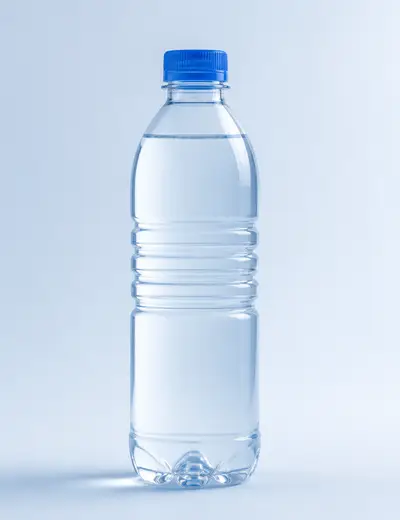
The half-litre bottle is the only container people keep on them all day. It fits the side pocket of a backpack, a car cup holder, a bike bottle cage and a handbag. Anything bigger has to be put down somewhere and arranged around; anything smaller runs out before you think of it.
That also shapes how it is bought. People rarely buy this water one bottle at a time: they stock up for an office week, a crew trip, the reception desk or a meeting room. We deliver small bottles across Almaty along with regular orders of large bottles — the driver is going to the address anyway, and there is always room in the van for a pack.
The water in our half-litre bottle is the same as in the 19 L bottle: the same artesian well, the same bottling, the same lab report. What differs is the container, and that an opened bottle does not need to be set up anywhere or covered with anything.
An opened bottle: how long it lasts and what to do with it
A sealed bottle has a shelf life of months, printed on the label. An opened one runs on a different clock, and nobody prints it: from the first sip the bottle stops being the producer's container and becomes your drinking vessel. For a size you carry around this is the main practical difference — a half-litre is almost never finished in one go; it is carried around half-drunk for half a day.
Water like this does not go off by itself but because of what gets into it. When you drink from the neck, some bacteria from your mouth stay on the thread and inside, and from then on everything depends on temperature: in the cool they barely multiply, in a warm bag or a car in the sun they multiply fast. So a bottle opened in the morning and left in the heat all day is no longer, by evening, the water you opened.
- Finish an opened bottle the same day rather than topping it up with fresh water the next
- In the car, keep the bottle in the shade of the cabin, not on the dashboard: that is where plastic gets hottest
- Do not freeze a single-use bottle whole — ice expands and deforms the bottle, and you cannot drink ice anyway
- If you pour into a glass instead of drinking from the neck, an opened bottle lasts noticeably longer
- A bottle that has been rolling around the boot for a week is easier to pour out than to guess about: it costs less than a lost day
A word about the car. In summer, air in a closed car in the sun reaches sixty degrees and more, and a dark dashboard gets hotter still. That does not make a plastic bottle poisonous, but the water heats up to tea temperature, loses its taste and stops quenching thirst — and that is the only kind of spoiling you will notice at once. A box under the seat or the door pocket solves the problem without any tricks.
You can tell that water in an opened bottle is no longer fit to drink without any instruments. The first sign is smell: fresh drinking water smells of nothing, and any noticeable smell means you should not drink it. The second is a plastic taste that appears after long heating. The third is a slight cloudiness or sliminess on the walls near the neck. None of the three appears within a day in normal conditions, and all three appear within a day in a car in the sun.
Another habit that costs more than it seems is refilling a single-use bottle. Thin PET is designed for one cycle: after several refills and squeezes, micro-cracks appear in the walls, and the neck thread cannot be properly cleaned with either a brush or a jet of water. For everyday carrying, get a reusable bottle or flask that can be taken apart and washed — that is what it is made for.
Still or sparkling: what to take on the road
In this size you almost always want still water. The reason is simple and has nothing to do with taste: a sparkling bottle builds up pressure in the heat and when shaken, and the first sip in the car turns into a fountain on your shirt. Still water does not do that — you can open it, close it, put it in your bag and open it again later.
The second argument is what people actually reach for. Still drinking water quenches thirst and leaves no aftertaste, so people sip it all day. Sparkling water is taken with food or once in the heat: it is more of a beverage than everyday drinking water. Still mineral water is a third case: it has its own mineral composition, and nobody drinks it by the litre.
- For the car and your bag — still only: the pressure in a sealed bottle has nowhere to go
- For the meeting table — still, so fizzing does not interrupt the conversation
- For the gym and a run — still, at room temperature; ice-cold water is not needed after exercise
- For lunch and banquets — sparkling next to still, leaving the choice to the guest
Where a half-litre bottle fits and where it does not
The shape of this bottle is set not by the plant but by the things around it. A half-litre bottle is about twenty centimetres tall with a base six and a half centimetres across, and both dimensions match not a bottling standard but a holder: a car cup holder, a bike bottle cage, a backpack side pocket. A one-litre bottle no longer fits those places, and that is not a detail but the reason people carry half a litre in particular.
| Place | Half a litre | Anything bigger |
|---|---|---|
| Car cup holder | sits on its base and stays put | a litre bottle is too wide, a 1.5 litre one tips over |
| Bike bottle cage | standard size, the cage is made for it | anything bigger falls out over bumps |
| Backpack side pocket | fits fully, with the edge of the cap showing | a litre bottle sticks out and catches |
| Fridge door | stands upright, the shelf holds it | the door cannot hold a 5 litre bottle at all |
| Handbag | lies flat | large bottles do not go in a bag |
That is why half-litre bottles are bought where water is needed on the move rather than in one place. Anything bigger needs a surface: a table, a shelf, a boot, a stand. As soon as there is such a surface, the half-litre loses its advantage — in a kitchen or meeting room it is cheaper to take a litre or a large container and pour into a glass.
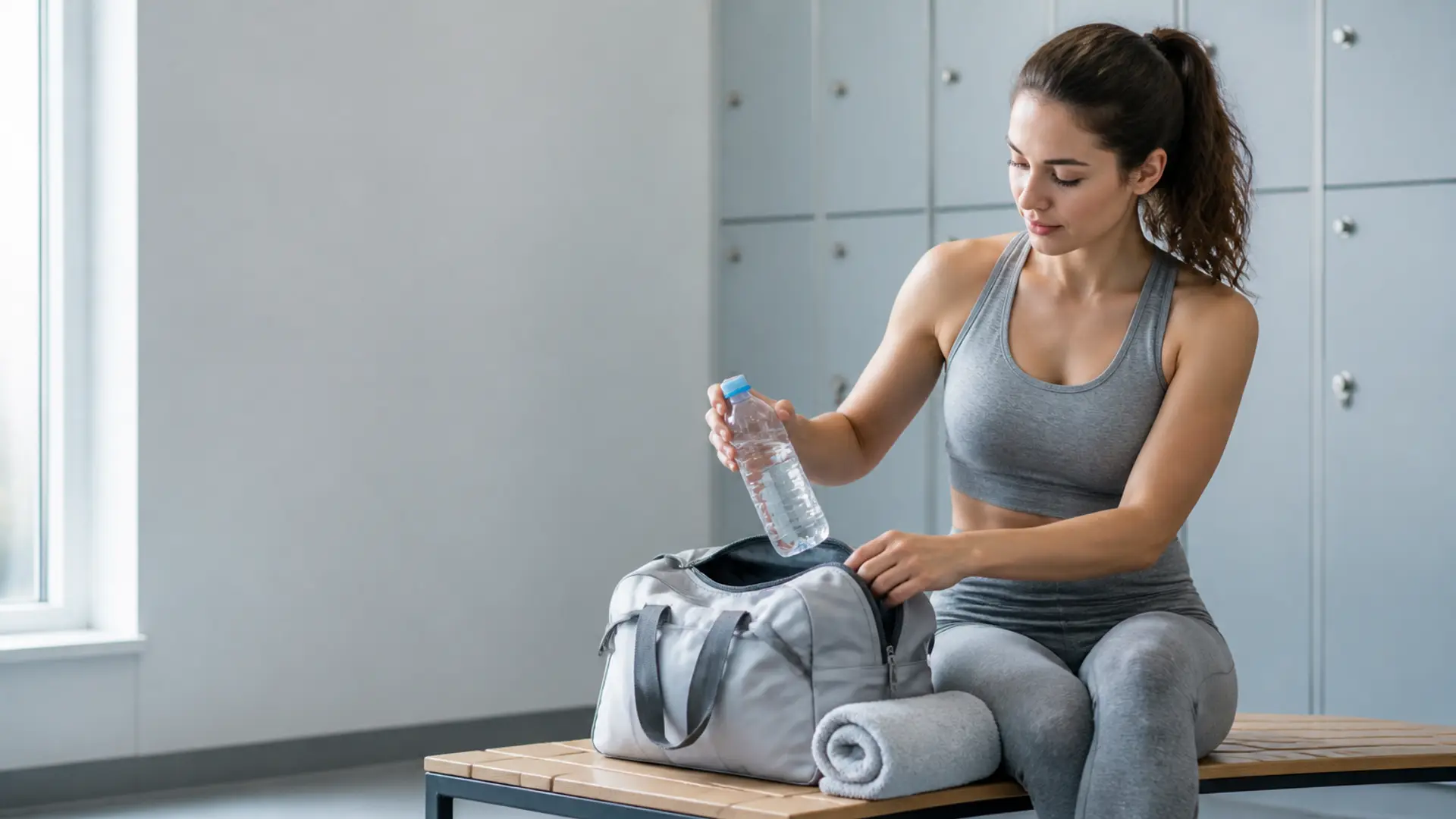
The gym follows the same rule, adjusted for sweat and busy hands. The bottle has to open with one hand, stand on the floor next to the equipment and not tip over at an accidental nudge — half a litre suits this, while a 1.5 litre bottle on the floor by the bench gets in the way of you and your neighbour. That is why many people carry a reusable bottle of the same size: it fits the same holders.
In the office this format has its own geography. The stock is kept not by the fridge but where people reach for it: at reception, in the meeting room, in the kitchen and by the exit to the car park. The fridge holds at most a day's worth, and the rest sits in a carton in a cupboard — in the shade and away from the radiator. Spreading a couple of packs around these spots is easier than crossing the whole floor for a bottle each time, and consumption becomes more even as a result.
Handing out is a separate case. On a crew trip, a community clean-up day or a race, water is given out one bottle per person, and the size is chosen so that people take it with them and drink it rather than add it to a shared pile. Half a litre does this better than any other format: big enough to be taken seriously and small enough not to be left half-drunk.
500 ml water: how many bottles go in a day
A half-litre bottle is handy for counting: it is a measure in itself. An adult needs about one and a half litres of plain drinking water over a working day, that is three bottles — and that is the figure used to plan office purchases, not an abstract norm from a leaflet.
After that, heat, activity and dry air-conditioned air shift the amount. An Almaty summer adds at least one bottle per person to the calculation, and outdoor work adds two.
| Who | Plain drinking water a day | Bottles |
|---|---|---|
| Desk worker, air-conditioned room | about 1.5 litres | three |
| Driver, courier or installer in summer | 2–2.5 litres | four or five |
| An hour's workout in the gym | one or two glasses more than usual | one or two |
| Schoolchild aged 7–10, half a day away from home | about 1 litre | two |
Cold water on the go: what cools it and what does not work
The water arrives at room temperature, and that is not a quirk of our service but a feature of the run: nobody in the city uses refrigerated vans for drinking water. Cooling is up to the recipient, and there are not many ways to do it. The difference between them is not the temperature but how long that temperature lasts once the bottle leaves home.
- The fridge the night before — the only way to cool the water fully and evenly; the bottle leaves home ready
- The freezer for twenty to thirty minutes — a quick fix before going out; do not leave it longer
- An insulated sleeve or cool bag — does not cool, but keeps what is already there, and does so for hours
- A frozen bottle next to a regular one in the backpack — an old trick of field crews, works for half a day
- A wet towel round the bottle in a draught — a last resort, gives a few degrees and only in the wind
Freezing a whole bottle is a bad idea for two reasons, both practical. Water expands by roughly a tenth of its volume when it freezes, so a sealed bottle bulges and sometimes splits at the seam. The second reason is simpler: a solid block of ice cannot be drunk. By the time it melts in your backpack, you will have been thirsty three times.
How long the cold lasts depends not on the bottle but on its surroundings. In a car in the sun, chilled water warms to room temperature in half an hour, in a backpack on your shoulder in an hour and a half to two hours, in an insulated sleeve in half a day. A double-walled reusable bottle keeps the cold longest, but it has to be washed every evening, and for a one-day trip that is an extra chore. If the water needs to be cool by a certain time, plan not the cooling but the last stretch of the journey: that is where everything is lost.
At an outdoor site the problem is solved not by cooling but by placement. The crate of water goes in the shade and away from machinery, with ice next to it if there is any, and bottles are handed out one per person before each break rather than putting the whole carton out in the morning. The point is simple: in the heat, the only water that gets drunk is the water that ends up in someone's hand, and the rest turns into a warm stock by lunchtime that nobody touches.
And about the temperature of the drink itself. After exercise and in hot weather you crave ice-cold water, but it goes down less easily: cold narrows the blood vessels of the mucous membranes, and thirst fades more slowly than with cool water. A simple guide: water from the fridge that has stood on the table for five to ten minutes. That is exactly what people ask to be put back on the table in the gym and the meeting room. The same rule applies to a workout: cool water in small sips between sets works better than ice-cold water gulped at the end — and half a litre is just enough for an hour's session if you sip it rather than down it all at the end.
A pack of 0.5 water or single bottles
Single half-litre bottles are bought at the shop round the corner when they are needed right now. Everything else is bought by the pack: it is cheaper per bottle, you do not have to place an order each time and you do not have to wonder whether there will be enough for the team meeting.
Buying 0.5 water by the pack makes sense when you have somewhere to put it: a carton takes up space, and in summer you do not want to keep it in the sun. Keep the stock somewhere dark and cool — plastic does not like heat and direct light, and that is the only storage restriction.
0.5 water wholesale is a separate conversation, and it is not about a percentage discount but about regularity: it is easier for the service to bring you twenty packs every two weeks than two packs four times a week. We discuss volume and schedule in the chat, because for a coffee shop, a construction site and an office of thirty people these are three different calculations.
What to check on a half-litre label
On a bottle you carry in your hand, the label is the only document you have with you. Look not at the advertising side but at the back: that is where the type of water, composition, source, producer and dates are. Five lines are enough to understand what exactly you have bought, and the difference between two similar bottles on the shelf usually shows up right there.
- Type of water: table drinking water, table mineral water or medicinal table water — these are different products with different rules of use
- Mineralisation in grams per litre: low for table water, noticeably higher for medicinal table water, and the latter is not drunk by the litre
- Source: a numbered well and a deposit, not just “purified drinking water” with nothing further
- Bottling date and shelf life: the first matters more than the second, as it shows how long the batch has been sitting
- Producer and plant address: for local water they are local, and that can be checked with one search
- Plastic code in the triangle on the base: for drinking water it is PET, a single-use container
Mineralisation deserves a separate word, because it is what people most often get confused about. Table water with a low salt content is the water you drink every day without limits: it has no aftertaste and does not put a load on the kidneys. Medicinal table water is prescribed rather than chosen by taste, and it has no place in a bottle you carry around — it is drunk as a course, by the glass and when indicated.
Read more: Mineral water delivery
The bottling date tells you more than the shelf life. Drinking water has a long shelf life, and a bottle that has sat in a warehouse for half a year is formally still fresh; in practice, the more recent the bottling, the less chance the batch has stood in the sun. Other things being equal, take the carton with the newer date — that is the whole secret of choosing between two identical price tags.
What the label does not have is the full lab report. A bottle has room for a few key figures, and the other two dozen live in a document the supplier is required to have. Asking for it when buying one bottle in a shop is pointless, but for regular office deliveries it is normal practice: the report is either shown or it is not, and the answer to that question says more about the supplier than the label.
Children's ranges sometimes carry an extra line: reduced mineralisation and an age mark. Such water differs not in purity but in composition, and it is bought for a specific purpose — for formula and for a small child. For an adult it offers nothing beyond ordinary table water, and there is no point paying extra for the wording.
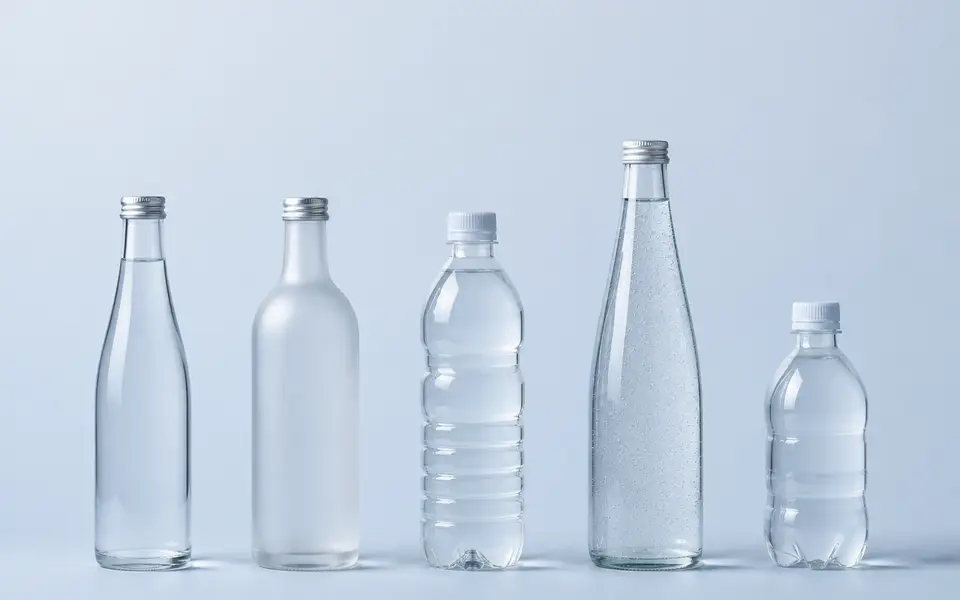
Still water in glass and in plastic
Glass is chosen where guests see the bottle: on a restaurant table, at a banquet, in a meeting room. Still water in glass picks up no foreign taste even after long storage and looks more fitting on a tablecloth. The price is weight and fragility — you cannot carry a pack of glass in one hand.
Plastic wins wherever the bottle is carried: it is lighter, does not break and costs noticeably less. Still water in glass and the same water in PET are one and the same water; the only difference is who sees it and how many times it gets moved.
How to order 0.5 L water in Almaty
Message us on WhatsApp with how many packs and the address. We bring small bottles along with large ones: delivery in the city is free from 2 large bottles per order, and most often the packs simply travel on the same run. If you do not need large bottles at all, tell us straight away — we will price the delivery separately and tell you before the order, not after.
An order placed before 10:00 usually goes out the same day, delivery windows are 9–13, 13–17, 17–21. The service has one day off: Sunday.